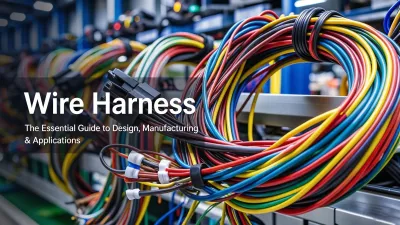
Waterproof wire harnesses are essential sealed wiring assemblies for industrial, new energy, and outdoor mechanical systems that operate in humid, dusty, wet, and submerged working conditions. Unlike standard wiring looms that suffer from moisture ingress, short circuits, and premature aging in harsh environments, professionally designed sealed wire harnesses adopt multi-layer sealing structures, high-grade raw materials, and standardized assembly processes to deliver stable power and signal transmission. This article covers the working principles, IP protection ratings, common connector types, material specifications, industrial testing standards, practical application scenarios, and professional selection guidelines for custom waterproof wire harnesses, helping engineers and procurement teams select reliable sealed cable assemblies for harsh-environment projects.
1. What Is a Waterproof Wire Harness?
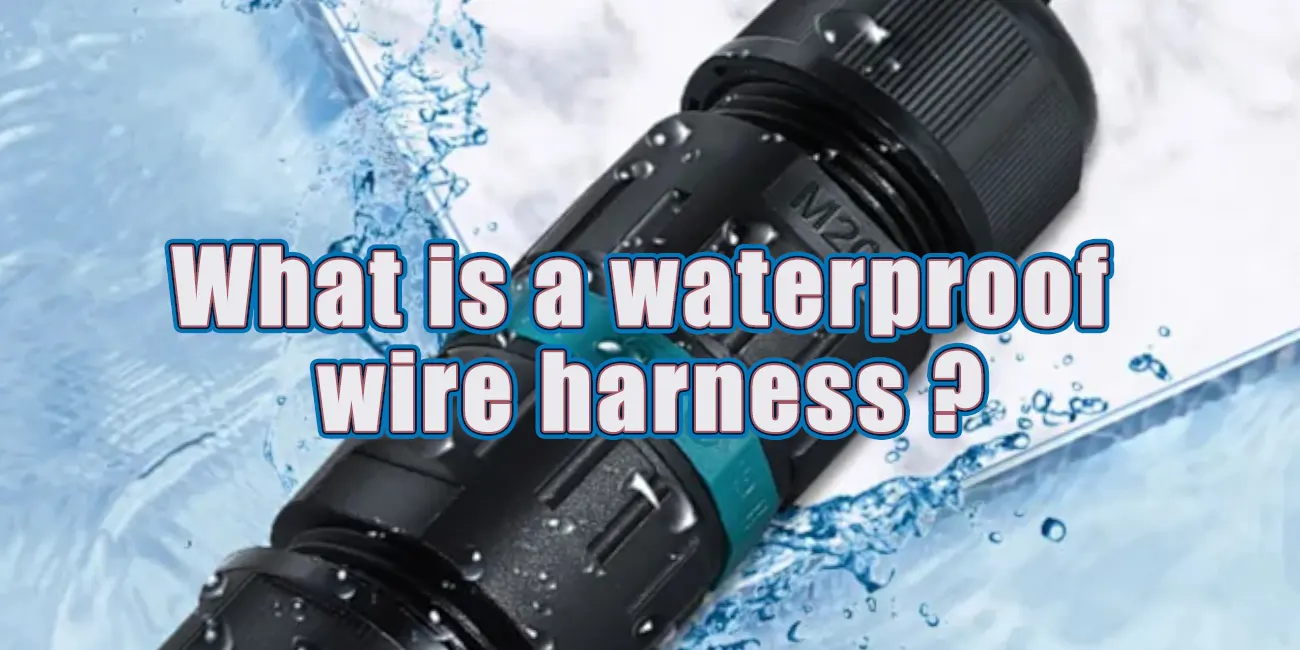
A waterproof wire harness (sealed cable assembly) is a custom-built electrical wiring solution designed to deliver stable power supply and signal transmission in humid, dusty, splashing, and submerged environments. Unlike standard wiring harnesses that are vulnerable to moisture ingress and corrosion failure, sealed wire harness assemblies adopt multi-layer structural sealing and industrial-grade materials to reduce potential water ingress paths and improve long-term environmental reliability.
It is critical to distinguish core industry definitions: a waterproof connector is only one component of a complete waterproof wire harness. A finished waterproof wiring assembly integrates wires, insulation, sealing structures, connectors, and protective accessories as a whole, serving as a core customized component for industrial equipment, new energy systems, and outdoor devices.
2. How Does a Waterproof Wire Harness Prevent Water Ingress?
A reliable sealed wire harness achieves environmental protection through a full-system sealing design, rather than relying solely on waterproof connectors. Professional manufacturers adopt multi-layer protective structures to reduce moisture ingress risks at all vulnerable points of the wiring assembly.
The overall environmental protection performance of a waterproof wire harness depends on the complete assembly, rather than relying solely on connectors. Professional manufacturers adopt systematic sealing designs across the entire wiring system tominimize moisture ingress risks. Core waterproofing mechanisms include the following key structural designs:
-
Connector Interface Sealing: Precision O-rings, gaskets, and locked mating structures block water and dust from entering connection terminals, the most common leakage point of traditional harnesses.
-
Cable Jacket & Wire Insulation: Specialized waterproof, oil-resistant cable outer jackets and high-density wire insulation prevent water penetration through the wire body.
-
Overmolding: Integrated injection molding is applied at cable-to-connector transition points to improve sealing reliability and reduce gap leakage risks.
-
Heat-Shrink & Splice Sealing: Heat-shrink tubes and waterproof sealants are used to encapsulate wire branching joints and splice points, providing additional protection against water ingress at vulnerable wiring sections.
-
Grommet & Backshell Sealing: Custom grommets and protective backshells seal wiring holes and equipment penetration positions, adapting to fixed installation scenarios.
-
Integrated Enclosure Protection: Cooperates with equipment shell structures to form a closed protective system for overall environmental isolation.
Professional Note: An IP rating describes protection against ingress of solids and water; it does not by itself define UV resistance, chemical resistance, salt-spray performance, or temperature capability. Waterproof performance is independent of anti-corrosion, anti-aging, and chemical resistance properties.
3. IP67 vs IP68 vs IP69K: Understanding Waterproof Protection Ratings
The IP Code defined by IEC 60529 is widely used to specify the degree of protection provided by electrical enclosures against solid particles and water ingress. It serves as the universal industrial grading standard for evaluating the environmental adaptability of sealed wire harnesses and waterproof connector assemblies. Notably, IP69K follows extended industry test criteria focused on high-pressure and high-temperature water jet resistance, differing from the immersion-based testing of IP67 and IP68 ratings.
|
IP Rating
|
Professional Definition
|
Application Scenarios
|
|
IP65
|
Dust-tight + protected against low-pressure water jet splashing from all directions
|
Ordinary outdoor equipment, non-submerged industrial devices
|
|
IP67
|
Dust-tight + protected against temporary short-term water immersion under specified standard conditions
|
Occasional rain soaking, temporary shallow water immersion
|
|
IP68
|
Dust-tight + protected against continuous long-term water immersion. The specific immersion depth and duration are defined by the manufacturer’s official specifications, not a unified 1-meter standard.
|
Underwater equipment and applications requiring continuous immersion under specified manufacturer-defined conditions
|
|
IP69K
|
Dust-tight + resistant to high-pressure and high-temperature water jet flushing
|
Engineering machinery, food machinery, equipment requiring high-pressure cleaning
|
4. Common Waterproof Connector Types for Wire Harnesses
Waterproof connectors are core matching components that determine the environmental performance of finished custom waterproof wire harnesses. The appropriate connector type is selected according to specific electrical parameters, mechanical stress, installation methods, and working environment requirements. Each connector series features unique structural designs and graded protection levels, with all performance parameters subject to specific model and manufacturer configurations rather than universal fixed specifications.
4.1 M Series Circular Connectors (M8 / M12)
M8 and M12 circular connectors are widely used in industrial sensors and automation waterproof cable assemblies. Available in multiple environmental protection configurations, IP67 or IP68 versions are commonly deployed for demanding industrial applications, while standard models support IP65 basic dust and splash protection.
Available in multiple contact configurations, M8 and
M12 connectors can support low-current signal transmission, medium-current control circuits, and partial low-power data connections depending on the connector specification. Overmolding technology is selectively adopted to seal the cable-to-connector interface and reduce potential moisture ingress paths, effectively adapting to automated production lines, environmental sensors, and outdoor monitoring equipment.
4.2 DEUTSCH DT Series Rectangular Connectors
The DEUTSCH DT series (DT04-2P, DT06-2S and other mainstream models) is a heavy-duty industrial connector dedicated to engineering machinery and new energy equipment harnesses. Different from common misunderstandings, DT series connectors adopt rugged thermoplastic housings, integrated cavity seals, and connector-position assurance features, with excellent shock resistance and vibration resistance.
Matched with customized waterproof wire harnesses, these connectors are designed to withstand vibration, shock, moisture, and other harsh environmental conditions, delivering stable power and signal connection for construction machinery, agricultural equipment, and outdoor new energy industrial devices. According to TE Connectivity official specifications, DEUTSCH DT series housings adopt rugged thermoplastic PA GF materials, integrated cavity silicone seals, and reliable locking structures, supporting 2 to 12 cavity configurations and 13A size 16 contacts for 12V/24V/48V industrial circuits, with a wide operating temperature range of -55°C to 125°C.
4.3 MC4 Photovoltaic Connectors
MC4 connectors are dedicated supporting components for solar photovoltaic system waterproof wire harnesses, featuring plug-and-play quick connection structures and built-in elastic sealing rings for convenient on-site installation and maintenance. Current ratings vary by connector model and conductor size; many photovoltaic connector designs are available for high-current DC applications.
When specified with suitable materials and properly assembled, MC4-based cable assemblies can be designed for outdoor exposure, including UV radiation, extreme temperature fluctuations, and humid moisture conditions, making them standard matching components for solar panels and photovoltaic power station sealed wiring harnesses.
4.4 M12 Flange Mount Connectors
M12 flange connectors are fixed wiring connectors for industrial control equipment, composed of flanges, sealing gaskets, and fastening bolts, supporting front or rear installation depending on the specific flange design. M12 flange connectors are available with different protection ratings, including IP67 versions suitable for standard industrial waterproof scenarios.
Matched with injection-molded insulating housings, finished
M12 flange-type waterproof wire harnesses are mainly used for fixed wiring of industrial control cabinets and environmental monitoring sensors, providing stable sealing protection for indoor and outdoor industrial control systems.
4.5 Waterproof RJ45 Ethernet Connectors
Waterproof RJ45 Ethernet connectors and cable assemblies are professional solutions for industrial outdoor network wiring. Adopting split shielded shells and elastic clamping structures, they provide stable shielding protection for network interfaces.
Available in IP67/IP68 protection grades, these waterproof network harnesses isolate interface hardware from humid and dusty environments. Proper sealing helps protect the connection from moisture and dust, while professional shielding structure and standardized cable construction help maintain stable signal integrity in industrial Ethernet and outdoor communication applications.
5. Core Materials of Premium Waterproof Wire Harnesses
The durability and environmental adaptability of waterproof wire harnesses are determined by full-cycle material selection. Professional customized harnesses adopt graded matching materials for housings, seals, conductors, and outer jackets to meet industrial standards:
-
Connector Housings: High-strength PA66 nylon and PBT thermoplastic materials, featuring flame retardant, anti-aging, and high-temperature resistant properties, suitable for long-term industrial harsh environment operation.
-
Sealing Components: Silicone rubber and thermoplastic elastomer (TPE) gaskets, with high elasticity and compression resistance to ensure long-term sealing stability.
-
Conductor & Plating: Precision copper alloy conductors with tin, nickel, or gold plating options, selected based on connector design, current load, and anti-corrosion requirements to ensure stable long-term electrical conductivity.
-
Cable Jackets: Specialized waterproof, oil-resistant, and UV-resistant outer sheath materials, adapting to outdoor and underground harsh environments.
-
Sealing Compounds: Silicone-based sealants and qualified potting compounds may be used where required to protect specific splice points, cable transition interfaces, and internal gaps against moisture ingress.
6. Industrial Testing & Certification Standards
Finished waterproof wire harnesses can be tested according to the product specification and application requirements to verify electrical, mechanical, and environmental performance.A critical engineering principle applies: Connector IP rating does not equal finished harness IP performance. A standalone connector may feature IP67 or IP68 protection, but the complete sealed wiring harness assembly may degrade in protection level due to cable entry gaps, splice points, overmolding interfaces, grommet installation, backshell matching, and mating assembly status.
Testing requirements vary by product design, application environment, customer specification, and certification requirements. Not every
waterproof cable assembly requires all listed tests. Most environmental durability tests are implemented for prototype validation, design verification, and periodic quality inspection, rather than full testing for every mass-produced harness.
6.1 Core Testing Items
-
-
Electrical performance test: continuity test, insulation resistance test, hipot withstand voltage test
-
Mechanical performance test: terminal pull force test, plug life test, vibration resistance test
-
Environmental aging test: UV aging, salt spray corrosion, high and low temperature cycle test
6.2 Certification Specifications
Where applicable, wire and cable materials may be selected to meet relevant UL requirements, while connector and finished harness compliance depends on the specific product design and customer certification needs. Custom manufacturers can provide targeted third-party certification reports according to project requirements to meet customer access standards.
7. Key Applications of Waterproof Wire Harnesses
With systematic dustproof, waterproof, and environmental adaptation capabilities, IP67 and IP68 wire harnesses are widely used in electrical systems exposed to moisture, dust, vibration, or outdoor conditions, serving as reliable connection solutions for industrial, new energy, and special equipment scenarios:
-
Industrial automation: Sensors, automated production equipment, industrial control cabinets
-
New energy industry: Photovoltaic power stations, new energy equipment, energy storage systems
-
Engineering machinery: Construction vehicles, agricultural machinery, outdoor engineering equipment
-
Special equipment: Underwater robots, underwater detection equipment, submerged electrical devices
-
Outdoor monitoring & communication: Outdoor cameras, field communication equipment, industrial network systems
8. How to Choose a Qualified Waterproof Wire Harness (Factory Selection Guide)
For engineering procurement and customized matching, the selection of waterproof wire harnesses needs to comprehensively consider working conditions and performance parameters to avoid model mismatch and performance failure. The core selection factors are as follows:
-
Required IP Rating: Select IP65/IP67/IP68/IP69K according to actual water immersion, spraying, and dust environment.
-
Electrical Parameters: Match current, voltage, and signal/data transmission requirements to avoid overload failure.
-
Environmental Conditions: Confirm operating temperature range, UV exposure, chemical corrosion, and salt spray environment.
-
Mechanical Requirements: Consider vibration frequency, plug mating cycles, and installation methods (fixed/portable).
-
Material Adaptability: Select cable jackets and sealing materials according to outdoor long-term use or underground working conditions.
-
Customization Demand: Support personalized customization of wire length, core number, branching methods, and connector models for custom sealed wiring harnesses.
-
Installation & Routing: Evaluate cable bend radius, on-site routing paths, connector orientation, strain relief design, and fixed mounting methods to ensure long-term waterproof reliability in actual operation.
9. Frequently Asked Questions (FAQ)
Q1: Is IP68 always better than IP67 for waterproof wire harnesses?
Not necessarily. IP68 supports continuous immersion but comes with higher costs. IP67 is sufficient for most temporary water exposure and outdoor scenarios. The best choice depends on actual working conditions rather than blindly pursuing higher ratings.
Q2: Does a waterproof IP-rated harness mean corrosion-proof?
No. IP ratings only evaluate solid and water ingress protection. Anti-corrosion, salt spray resistance, and UV resistance are independent performance indicators that require special material and process optimization.
Q3: Are all M12 connectors IP68 waterproof?
No. M12 is only a dimensional and structural specification. Its protection level is determined by sealing structure, design process, and installation status, covering IP65, IP67, IP68, and IP69K> grades.
Q4: Does IP68 apply to the entire wire harness or only the connector?
IP ratings marked on standalone waterproof connectors only represent component-level protection. The finished IP68 wire harness protection performance depends on the overall assembly, including cable sealing, splice protection, overmolding quality, and on-site installation accuracy.
Q5: Can a waterproof wire harness be used underwater?
It depends on the certified IP rating and manufacturer specifications. Only IP68-rated sealed cable assemblies designed for continuous immersion can be used for long-term underwater scenarios; IP67 harnesses are only suitable for temporary shallow water exposure.
Q6: How do you seal wire splices in a waterproof harness?
Professional waterproof splice solutions include heat-shrink sealing tubes, silicone potting, overmolding encapsulation, and sealed junction structures, effectively reducing moisture ingress at wiring joints.
Q7: Can waterproof wire harnesses be customized with different connectors and cable lengths?
Yes. Custom sealed wiring harnesses support flexible matching of M8/M12, DEUTSCH DT, MC4, and waterproof RJ45 connectors, with adjustable wire lengths, core counts, and branching structures to adapt to diverse industrial and automotive waterproof wiring scenarios.
10. Conclusion
A high-quality waterproof wire harness is a systematic customized assembly integrating multi-layer sealing structures and industrial-grade materials, not a simple combination of waterproof connectors. Its core value lies in providing long-term stable electrical connection solutions for various harsh industrial environments. By accurately distinguishing IP rating definitions, matching professional materials and testing standards, and selecting specifications according to actual working conditions, enterprises can effectively avoid equipment failure caused by harness performance defects.
For custom waterproof wire harness projects, the required IP rating, connector type, cable construction, sealing method, and environmental conditions should be defined before production. A qualified manufacturer can then match the harness design, materials, and testing requirements to the actual application. Our team supports custom waterproof wire harness development from connector selection and sealing design to assembly and testing, providing reliable sealed wiring solutions for industrial, new energy, and outdoor harsh-environment equipment.