Energy storage systems (BESS) pack megawatt-hours into containers, and their harnesses connect thousands of cells into modules, modules into racks, and racks into the power conversion system — under high voltage, high current, thermal stress and safety regulation. Energy storage harness work is EV-class discipline applied at stationary scale. This guide covers the knowledge base.
The BESS Architecture and Its Harness Classes
A storage system's harness hierarchy mirrors its electrical hierarchy:
- Cell/module interconnects: busbar-adjacent wiring carrying module-level series connections — short, high-current, thermally critical terminations.
- Module-to-rack harnesses: power connections plus BMS (battery management system) communication and sensing harnesses — the voltage and temperature sense lines that keep the BMS informed.
- Rack-to-PCS cabling: the high-voltage backbone between racks and the power conversion system — large cross-sections, shielded, interlock-equipped.
- Auxiliary systems: HVAC, fire suppression, lighting, and control wiring — the industrial class inside the same container.
Safety Systems in the Harness
Storage safety runs through the harness the way automotive HV does (our HV guide covers the principles): interlock loops (HVIL) that de-energize when service connections separate, touch-proof HV connectors, orange-jacketed HV identification, and — storage-specific — the sensing harness that feeds the BMS every cell/module voltage and temperature. The BMS harness is safety-critical: its accuracy decides whether the system sees a developing fault before the fault escalates. Sensor circuits, connector reliability and routing protection here are fire-safety items, not convenience items.
Thermal and Environmental Reality
Containers cycle from cold nights to peak-charge heat, and the harness lives through every cycle: insulation and jacket ratings with real margin, terminations engineered against thermal cycling loosening (torque and crimp verification, re-check schedules), routing clear of heat sources with the airflow, and — in liquid-cooled designs — harness routing integrated with the cooling architecture. Outdoor installations add UV and weather sealing at container penetrations.
EMC in a Switching Container
The PCS switches megawatts; the BMS harness carries microvolt-class sense signals meters away. The EMC discipline: shielded sense constructions with 360-degree terminations (our shielded cable guide covers the mechanics), physical separation between power and sense routing, and grounding architecture that keeps PCS noise out of the BMS measurements. A storage system whose BMS reads noise instead of voltage manages nothing — EMC here is functional, not just compliant.
Manufacturing Discipline
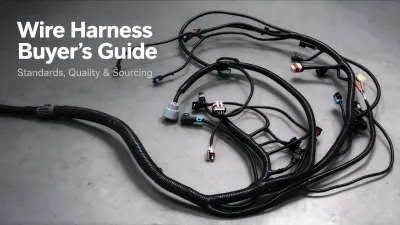
Storage harness production runs at the automotive-class process level: calibrated crimping with monitoring, 100% hipot and insulation-resistance testing on HV assemblies, sense-harness accuracy verification, torque-controlled terminations, and traceability to material lots — because a field failure analysis in the storage industry starts with the batch records. Our HV harness guide details the test stack.
Kaweei Energy Storage Harness Manufacturing
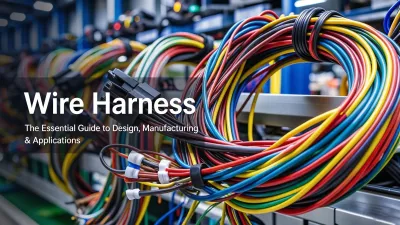
Kaweei manufactures energy storage harnesses — module interconnects, BMS sense harnesses, rack-to-PCS HV cabling, auxiliary wiring — with the test and traceability documentation storage programs require. Contact our engineering team with your system architecture; our new-energy guides cover the design frameworks.