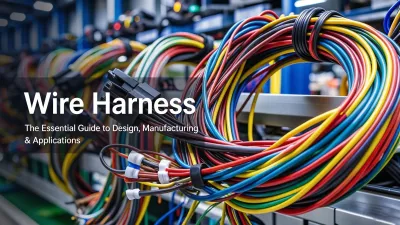
Inside every medical device — analyzer, ventilator, monitor, imaging system — a harness carries its electrical life: power, signals, sensor lines, control circuits. Medical wire harnesses apply the industrial harness discipline under medical governance, where process documentation and traceability matter as much as construction skill. This guide covers the discipline in full.
What Makes Medical Harnesses Different
The wire, connectors and crimps look industrial because the physics is industrial. The differences are systemic: process control — manufacturing under quality-system governance where the process is validated, monitored and documented (ISO 13485-class expectations); traceability — each harness linked to material lots, operators, equipment and test data through serial records; change control — no material or process substitution without the device maker's approval, because the device's regulatory file references the approved build; verification depth — 100% testing with per-unit records as the floor, not the exception.
Construction Requirements by Circuit Class
- Biosignal circuits: microvolt-level signals demand low-noise construction — shielded, carefully routed, terminations verified for noise performance as well as continuity. Our EMC guide's principles apply at their most demanding.
- Energy circuits: ESU, defibrillation-adjacent and therapy circuits — insulation classes verified by 100% hipot, construction where insulation failure is a patient event (our ESU cable guide covers the class).
- Precision sensor circuits: pressure, flow, temperature — accuracy-critical wiring where contact resistance and noise floor are specifications.
- Power and control: the industrial base — still under medical documentation discipline.
Materials for the Medical Environment
Device interiors and exteriors see cleaning chemicals, and some harnesses see patient proximity: jackets and connectors selected for disinfectant survival (repeated aggressive cleaning cycles), biocompatible materials where contact standards apply, restricted-substance compliance documented, and materials chosen for the device's full service life — a decade of cleaning cycles is a materials test, not a datasheet line.
Manufacturing Practice
Medical harness production emphasizes: fine-gauge precision work (device internals are compact — 26-30 AWG class with precision stripping and calibrated crimping), cleanliness in handling (no contamination in device interiors), workmanship standards referenced to IPC/WHMA-class criteria with medical documentation, per-station process records, and testing with the documentation chain — every serial's results retained. The visible difference from industrial work is the paper: medical harnesses ship with their histories.
Application Classes
- Diagnostics: analyzers and lab equipment — the industrial-like end, still governed.
- Monitoring: patient monitors and their internal/inter-module wiring — biosignal discipline.
- Life support: ventilators and infusion — reliability classes where the failure analysis is regulatory.
- Imaging: high-data, high-power systems with their flex and EMC classes.
Kaweei Medical Harness Manufacturing
Kaweei manufactures medical wire harnesses — precision internals, biosignal-adjacent constructions, energy-class assemblies — under documented process control with per-serial traceability from our Dongguan facility. Contact our engineering team with your device class; our medical cable guides map the application families.