by Admin
2025-09-01 11:53:52
D-sub cable knowledge sharing: the difference between VGA, HDMI, and DVI
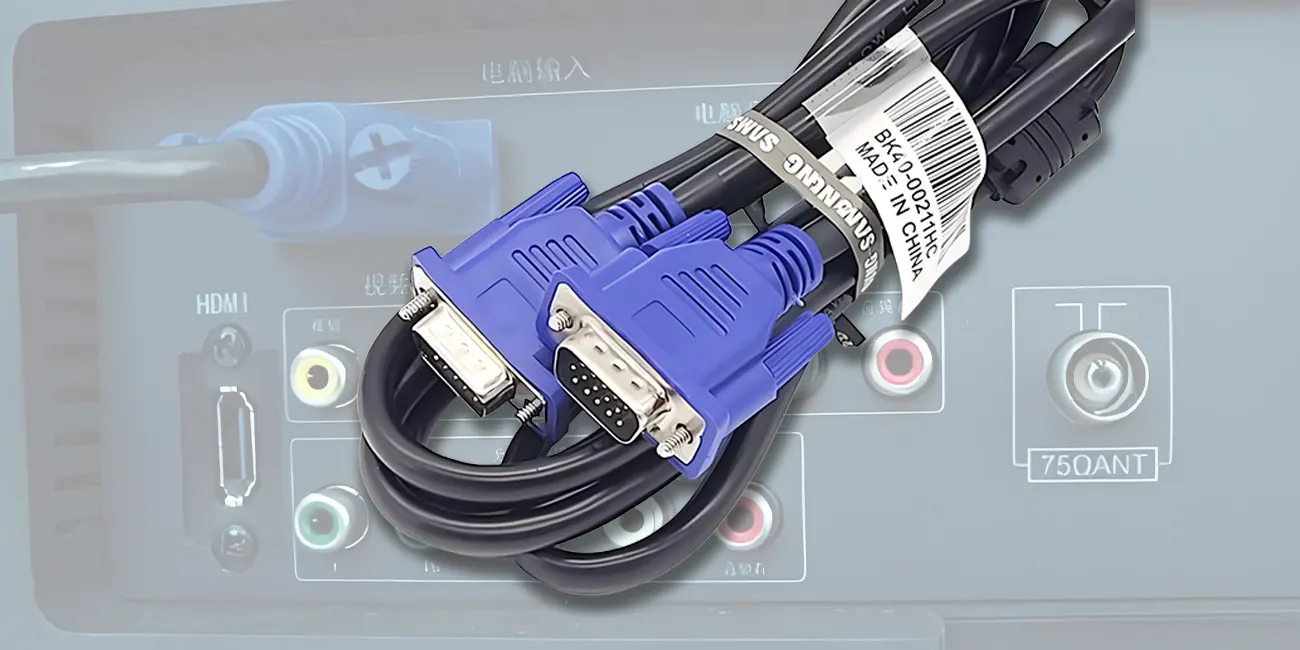
D-subminiature cable is a widely used classic connection solution. Its durable metal housing, multi-pin design, and excellent compatibility have made it a popular choice for decades in industrial, communications, medical, and computing applications. While D-sub has gradually faded from mainstream use in consumer electronics with the rise of digital interfaces like HDMI and USB-C, it continues to play an irreplaceable role in high-reliability and professional applications. Understanding the definition, applications, and differences between D-sub cables and other interfaces not only helps engineers select the right connection solution but also provides a reference for businesses in cable customization and upgrades.
1. What is a D-sub cable?
D-subminiature cable is a common electrical wiring harness. Its core feature is its D-shaped connector. Originally designed by ITT Cannon in the 1950s, D-sub connectors are widely used in industrial control, computer interfaces, communications equipment, and military electronics due to their ruggedness, reliability, and multi-pin interface capabilities. D-sub cables get their name from the "D"-shaped connector.

2. Typical Applications of D-sub Cable Assemblies
- Computer and monitor connections (such as early VGA interfaces)
- Industrial automation control (PLC, sensor, and servo motor interfaces)
- Communications equipment (serial RS-232/422/485)
- Aerospace and military electronics (high-reliability data transmission)
- Medical equipment (imaging systems, diagnostic instruments)
3. What types of D-sub connectors are there?
D-sub connectors come in a variety of pin counts and shell sizes. Common types include:
- 9-pin (DE-9): Commonly used for RS-232 serial ports
- 15-pin (DA-15/HD-15): Used for gaming interfaces or VGA monitors
- 25-pin (DB-25): Commonly used for parallel printer interfaces
- 37-pin, 50-pin, and higher: Used in industrial and professional communications
High-density versions (HD D-sub) are also available, allowing for more pins in a smaller space.

4. Which is better, HDMI or D-Sub?
HDMI is a digital video and audio transmission interface, while D-Sub is an analog signal interface.
- HDMI Advantages: Supports high-definition video and audio, and is compatible with modern monitors and TVs.
- D-Sub Advantages: Strong compatibility, suitable for older devices, and high interference resistance.
HDMI is superior in terms of image quality and future compatibility; however, D-Sub still has irreplaceable value in industrial and legacy equipment applications.
5. How do I convert a D-Sub cable to an HDMI cable?
D-Sub to HDMI requires an active converter because the two signals are different (analog vs. digital). Common solutions:
- Using a D-Sub to HDMI adapter (with a conversion chip)
- Using a VGA to HDMI cable (requires an external power supply or built-in conversion circuitry)
6. Are D-Sub and VGA the same?
- Strictly speaking, D-Sub is a type of connector, while VGA is a standard for transmitting analog video signals using the 15-pin D-Sub connector.
- In other words, VGA is an application of D-Sub, but D-Sub's uses are not limited to VGA.

7. Are D-Sub and DVI the same thing?
No.
- D-Sub: An analog interface, primarily used for VGA video and serial communication.
- DVI: A digital interface, supporting higher resolutions and digital video transmission.
The two differ significantly in appearance and performance and are not directly interchangeable.

8. Advantages and Benefits of D-Sub Connectors
- Durability: Metal housing provides excellent shielding
- High Compatibility: Widely used in legacy and industrial equipment
- Multi-Pin Design: Supports integrated signal, power, and control transmission
- High Reliability: Suitable for harsh environments and long-term stable operation
9. FAQs Frequently Asked Questions About D-sub Cables
Q1: Are D-sub cables still available?
Yes, D-sub cables are still widely used in industries such as industry, communications, and medicine.
Q2: Can D-sub cables be customized?
Yes, we can. Custom cable manufacturers like Kaweei can provide D-sub cable solutions tailored to customer needs, with varying pin counts, shielding structures, and application environments.
Q3: Can D-sub cables replace HDMI?
Not entirely. D-sub is an analog signal and cannot directly transmit high-definition digital video, but limited compatibility can be achieved through converters.
Q4: Is the D-sub connector obsolete?
Although it's gradually being replaced by HDMI and USB-C in the consumer electronics sector, it still retains strong relevance in industrial and professional fields.

10. Conclusion
D-sub cables, a classic connectivity solution, continue to play a vital role in industrial control, communications, and medical equipment thanks to their robustness, versatility, and wide compatibility. While D-sub is no longer a mainstream consumer standard with the increasing popularity of digital interfaces, it remains irreplaceable in professional applications. For businesses requiring specialized customization, choosing a custom cable harness manufacturer like Kaweei offers highly reliable and specialized D-sub cable solutions.