Behind every computer is a nest of cable families — USB, display, network, power and internal board-level assemblies — each with its own physics and failure habits. This guide maps the families and gives practical selection rules that prevent the common mistakes: the cable that works until it doesn't, the display link that drops at 4K, the USB device that disconnects at random.
USB: The Ubiquitous Family
USB spans speeds from 1.5 Mbit/s to 80 Gbit/s, and the cable requirements scale with them. Low/full-speed devices tolerate almost any cable; USB 2.0 at 480 Mbit/s needs controlled differential impedance but works over 5 m; USB 3.x and USB-C at multi-gigabit rates need shielded, twinaxial constructions with length limits shrinking to about a meter for passive cables at the top rates. Practical rules: length is the first casualty of high speed (passive extensions beyond spec produce exactly the intermittent-disconnect behavior users blame on devices), and connector quality matters because USB-C receptacles see mechanical wear with every cycle — our USB splitter and data cable guides cover the family details.
Display Interfaces: HDMI, DisplayPort and Their Miniatures
HDMI and DisplayPort carry multi-gigabit TMDS or DP links whose cables are engineered transmission lines: twisted pairs with controlled impedance, shields per pair, and length limits that high-speed operation enforces regardless of what marketing prints on the box. Micro and mini variants compress the geometry and amplify every manufacturing tolerance — our micro HDMI analysis details why construction quality dominates at these sizes. Selection rule: buy length you need, no more, and from a supplier who states the construction, not just the version number.
Network Cables
Ethernet twisted-pair cabling (Cat5e and up) is the most standardized cable family in computing — its performance lives in pair-twist precision and connector termination quality. Factory-terminated patch assemblies beat field terminations for reliability in anything but permanent infrastructure, and industrial deployments move to shielded, oil- and flex-rated variants in machinery.
Internal Cables: Power and Board-Level
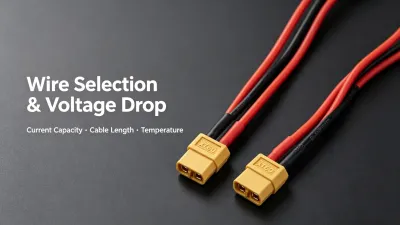
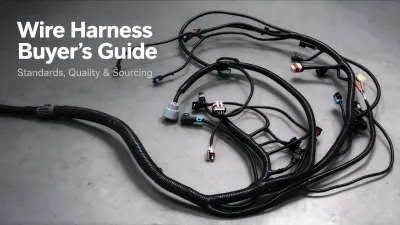
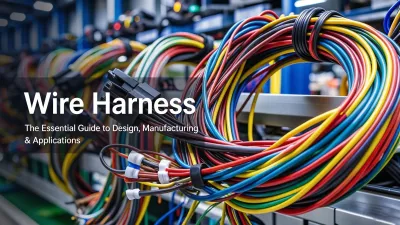
Inside the machine, the cable families change character: ATX power and PCIe power assemblies carry tens of amps on crimped terminals whose quality decides stability under load; SATA and front-panel assemblies carry modest data and signals on fine wires; and fan, sensor and board-to-board assemblies fill the gaps. These are crimp-contacts-in-housings constructions where terminal selection and crimp quality are the whole story — our connector detection analysis covers the failure modes.
Universal Selection Rules
- Speed first: interface version and its real length limit beat every other spec.
- Construction over branding: shielded, controlled-impedance constructions at speed; nothing else at the same price does the job.
- Connector class by cycles: how often it will be plugged and unplugged decides the connector tier.
- For assemblies you source at volume: demand test documentation, not just datasheets.
Kaweei manufactures computer and peripheral cable assemblies — USB family, display links, internal power and board-level harnesses — with full electrical test and documented construction. Contact us with your interfaces and volumes for a quotation.