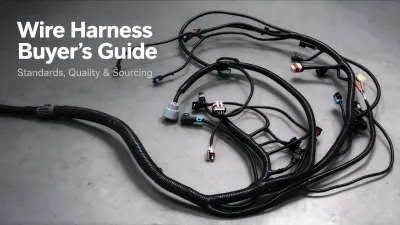
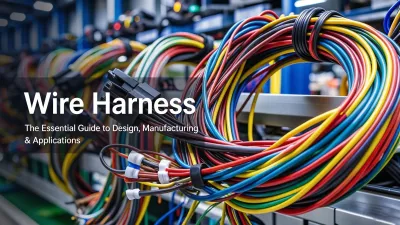
Aerospace wire harnesses operate in one of the most demanding electrical environments: wide temperature swings, intense vibration, strict weight budgets and certification requirements that trace every wire back to its melt lot. Whether the project is an UAV, an avionics retrofit or a satellite, understanding what makes aerospace harnesses different helps you specify them correctly and choose a capable manufacturer.
Weight Is a Design Variable, Not an Afterthought
In aircraft and UAV programs, every gram of wiring competes with payload and fuel. This changes material choices across the board: conductors are often copper-clad aluminum or high-strength copper alloys for smaller gauges; insulation is thin-wall fluoropolymer (PTFE, FEP, PTFE tapes) rather than thick PVC; and connectors are lightweight aluminum or composite shells. The design goal is the minimum safe conductor size with the thinnest insulation that still meets abrasion and arc-resistance requirements — over-specifying 'for safety' paradoxically reduces system safety by adding mass.
Flammability, Smoke and Toxicity
Aerospace insulation must resist flame propagation and, in crewed aircraft, produce minimal smoke and toxic gas when heated. This is why materials like PVC — common in ground applications — are largely absent from flight harnesses. Wire specifications in this field define flammability tests, and harness shops must buy wire that carries the proper certification, not just wire that 'looks similar'.
Vibration and Strain Relief
Continuous vibration means every termination is a potential failure point. Aerospace practice includes:
- Crimp contacts (almost never solder) with calibrated, traceable tools
- Strain relief at every connector and every breakout
- Supported routing with clamps sized to the harness bundle diameter
- Backshells that terminate shields 360 degrees for both EMI control and mechanical support
Shielding and EMI
Avionics, radios, radar and switching power supplies share small metal airframes, so shielding design is central. Common constructions include overall braided shields with individual shields on sensitive pairs, and shield terminations specified per circuit rather than defaulted. Grounding philosophy (single-point versus multi-point) is decided at the system level and must be respected in harness build documentation.
Documentation and Traceability
What separates an aerospace harness shop from a general industrial one is paperwork: wire lot traceability, crimp height records, pull-test logs, continuity maps and configuration control of every revision. If a manufacturer cannot produce these records on request, it cannot support an aerospace program regardless of build quality.
Working with a Manufacturing Partner
For UAV and industrial-aerospace programs, Kaweei builds harnesses to customer specifications with full first-article documentation and per-order test records. We support both prototype builds and production runs from our Dongguan facility. If you are evaluating suppliers for an aerospace or UAV wiring program, contact our team with your wire list and environmental requirements, and see also our UAV cable solutions overview for related platforms.