If your product transmits sensor signals, control commands, or electrical power between electronic assemblies, a low voltage wiring harness serves as the organized interconnection system. From 12 V passenger vehicle electrical networks to control wiring on industrial machinery, these assemblies connect switches, sensors, actuators, lighting units, and ECUs into a robust electrical network.
This engineering guide defines low voltage wiring harnesses, explains circuit operation, breaks down component selection, outlines real-world applications, contrasts low-voltage and high-voltage designs, and provides standards-based specification criteria for custom projects.
What Is a Low Voltage Wiring Harness?
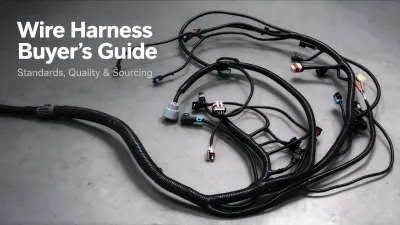
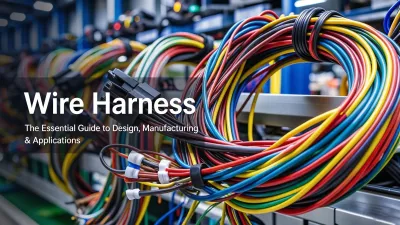
A low voltage wiring harness is an assembly of insulated conductors, terminals, connectors, and protective materials built to distribute power or transmit signals within a defined electrical system. Typical deployments include 12 V / 24 V vehicle circuits, 48 V auxiliary networks, and industrial control wiring. Voltage classification always follows the equipment type, industry norms, and applicable safety standards.
Low voltage harnesses do not deliver high-output propulsion power. They fulfil three core circuit functions:
- Signal transmission: Sensor readings, digital control commands, and CAN/LIN communication data at low current levels.
- Control power: Actuating relays, solenoids, actuators, and indicator lights at 12 V, 24 V, or 48 V.
- Power distribution: Delivering electrical power from power distribution units to ECUs, displays, sensors, and other loads, with design constrained by circuit voltage and current limits.
Low voltage does not eliminate electrical failure risks. Undersized conductors, poorly terminated contacts, or degraded insulation can lead to overheating, short circuits, and thermal failure. Every low voltage assembly must be engineered to match operating current, ambient temperature, and environmental exposure, same as any other electrical wiring assembly.
How Does a Low Voltage Wiring Harness Work?
A low voltage harness is a structured collection of circuits linking controllers, sensors, and end loads. Circuits fall into three functional categories:
- Power distribution: Supply and return current paths for powered electrical components.
- Signal transmission: Analog sensor lines, digital I/O wiring, and serial data buses such as CAN and LIN.
- Control connections: Bidirectional links between electronic controllers, input sensors, and output actuators.
To maintain long-term reliability under vibration, heat, and moisture, the harness uses appropriately sized conductors, suitable terminations, compatible connectors, and protective sleeving. The core design objectives are limiting voltage drop, mitigating electromagnetic interference, and preserving mechanical and electrical integrity across the full service life.
Key Components of a Low Voltage Wiring Harness
Most low voltage harnesses include some combination of the following components; material selection varies fully by application requirements:
| Component | Role and Material Selection Rules |
|---|---|
| Conductors (wire) | Carries electrical current and signals. Copper conductors are standard for low voltage assemblies. For automotive wire types, conductor and insulation requirements follow relevant specifications such as JASO D 611 where applicable. Conductor cross-section is selected based on current demand, allowable voltage drop, temperature limits, installation bundling conditions, and terminal compatibility. |
| Insulation | Provides electrical isolation between individual circuits. PVC is widely used for cost-sensitive applications requiring good flexibility and easy processing. XLPE, PUR, and other insulation materials are selected according to operating temperature range, abrasion resistance, chemical exposure, and flexibility requirements. Material suitability must be verified against the official wire specification; XLPE and PUR cannot be treated as interchangeable for all environments. |
| Terminals | Metal contact elements that form electrical and mechanical joints with wire ends. Crimp acceptance criteria follow assembly workmanship standards: IPC/WHMA-A-620 governs overall harness assembly quality; USCAR-21 applies exclusively to automotive non-soldered crimp validation; SAE AS7928 covers copper crimp terminals and splices for relevant component types. These three standards are not interchangeable. |
| Connectors | Molded housings that align and lock mating terminal contacts. When IP67 or IP68 ingress protection is required, connector selection must match cable entry seals, grommet design, and the full assembly’s sealing structure; sealed connectors alone do not guarantee full waterproof performance. |
| Protective sleeving & covers | Corrugated loom, fabric tape, braided tubing, or heat-shrink sleeves protect wire bundles against abrasion, thermal damage, and moisture while maintaining neat routing. |
| Fasteners & grommets | Clips, rubber grommets, and mounting brackets secure the harness along routing paths to prevent chafing and vibration-induced fatigue damage. |
Low Voltage vs. High Voltage Wiring Harnesses
The technical differences between low-voltage control assemblies and high-voltage traction harnesses stem from voltage safety limits and power load requirements:
| Attribute | Low Voltage Harness | High Voltage Harness |
|---|---|---|
| Voltage Range | Class A (≤60 V DC / ≤30 V AC RMS) per ISO 6469-3 automotive definitions; industrial voltage thresholds follow separate product standards. | Class B (60 V–1500 V DC, 30 V–1000 V AC RMS) under automotive ISO 6469-3 rules. |
| Primary Function | Sensor signalling, control logic, and low-current auxiliary power delivery. | High-current traction power transfer for electric vehicle powertrains. |
| Typical Systems | 12 V/24 V body electrical systems, 48 V auxiliary networks, industrial PLC control circuits. | EV battery packs, inverters, drive motors, and high-voltage power distribution units. |
| Insulation Design | Insulation system sized to match rated voltage, operating temperature, and chemical exposure (PVC, XLPE, PUR). | Thick, thermally resistant insulation; orange outer marking is only required when specified by vehicle standards or customer engineering drawings. |
| Conductor Sizing | Cross-section sized for current load, voltage drop, and temperature rise; small signal wires and larger power cables are both common. | Oversized conductors engineered to carry sustained high traction current. |
| EMI Shielding | Shielded twisted pairs only for sensitive low-level signal circuits. | Shielding is implemented selectively based on EMC system design, not applied uniformly across all high-voltage assemblies. |
| Relevant Standards | Assembly workmanship: IPC/WHMA-A-620; automotive crimp validation: USCAR-21; copper terminal specs: SAE AS7928; vehicle electrical safety: ISO 6469 series (Class A only). | Vehicle electrical safety: ISO 6469-3; federal crash safety: FMVSS 305; high-voltage connector performance: ISO 20076. The final standard set depends on vehicle type, target market, and design requirements. |
| Weight & Construction | Usually lighter and easier to route, though final weight depends on conductor size, shielding, and protective construction. | Generally heavier and less flexible due to thick insulation and large conductors, with higher material cost. |
This table covers automotive Class A/Class B classification only. In industrial, marine, and consumer equipment, low/high voltage boundaries follow product-specific standards. Voltage classification never equates to current magnitude: low-voltage circuits can carry large continuous current, so conductor sizing and terminal ratings must always be calculated against current and temperature, not voltage alone. Most electric vehicles include both Class A low-voltage auxiliary circuits and Class B high-voltage traction circuits running in parallel.

Common Applications of Low Voltage Wiring Harnesses
Low voltage harnesses are required wherever discrete electronic modules need interconnection. The primary application categories include:
- Automotive & off-highway vehicles: Full 12 V body electrical systems, including lighting, instrument clusters, infotainment, safety sensors, window actuators, and CAN/LIN data communication networks.
- Electric vehicles (EVs): Independent low-voltage auxiliary networks powering BMS control electronics, ECU modules, dashboard displays, and accessory loads, fully separated from the high-voltage traction battery circuit.
- Industrial automation: PLC control panel wiring, sensor interconnections, relay and actuator control circuits on factory machinery.
- Consumer appliances: Internal power and signal interconnects inside household and commercial electronic devices.
- Marine equipment: Instrumentation, lighting, and control wiring built to withstand salt fog, high humidity, and continuous vibration.
How to Specify a Low Voltage Wiring Harness
To produce a durable assembly that meets full service-life performance, specifications should be structured into three sequential engineering stages:
1. Design Inputs
Circuit voltage and rated current, individual wire length, signal type (analog/digital/bus data), continuous operating temperature, mechanical routing conditions, ingress protection requirements, and full connector part numbers.
2. Manufacturing Requirements
Wire stripping and processing rules, terminal termination methods, connector pin assignment, branch point construction, and cable bundling & fixing specifications.
3. Verification and Testing
Continuity and short-circuit screening, insulation resistance measurement, and targeted environmental testing only where required by the design specification.
For conductor sizing calculation, review our How to Choose the Right Wire Gauge technical guide. For sealed cable assemblies, refer to our Waterproof Cable Assemblies Guide.
Engineering tip: For safety-critical automotive circuits, mutually define workmanship class, crimp acceptance rules, inspection scope, and electrical test coverage together with the customer. Crimp quality must comply with terminal and wire manufacturer specifications. Cross-section analysis, pull-out force testing, and continuity screening are executed strictly per the agreed validation and production control plan.
Quality and Standards for Low Voltage Harnesses
Harness reliability depends on crimp quality, connection integrity, and insulation durability. Industry standards serve distinct purposes and must be selected to match project scope:
- Assembly workmanship & acceptance: IPC/WHMA-A-620 defines inspection criteria for crimps, splices, and mechanical wiring assembly.
- Automotive crimp validation: USCAR-21 provides test protocols exclusively for non-soldered wire-to-terminal crimp joints in automotive applications.
- Copper terminal specifications: SAE AS7928 covers crimp lugs, splices, and terminal hardware; it is not interchangeable with USCAR-21.
- Vehicle electrical safety: ISO 6469-3 sets Class A / Class B voltage limits only for road vehicle electrical systems; this standard does not apply to general industrial wiring projects.
Reputable manufacturers provide documented test evidence tailored to project requirements, including crimp cross-section reports, terminal pull-force data, and electrical test records aligned with the customer’s validation plan. This eliminates the most common field failures: intermittent contact, broken conductor strands, and corrosion-induced open circuits.
FAQ: What Is a Low Voltage Wiring Harness?
What voltage range counts as low voltage?
Under automotive ISO 6469-3 rules, Class A low voltage is defined as ≤60 V DC or ≤30 V AC (RMS). Most low-voltage harnesses operate at 12 V, 24 V, or 48 V. For industrial, marine, and consumer products, voltage classification follows the relevant product safety standards.
What is the core difference between low voltage and high voltage harnesses?
Low voltage assemblies carry control signals and low-current auxiliary power within automotive Class A voltage limits. High-voltage traction harnesses carry high power at Class B voltage levels and require thicker thermal insulation; orange insulation marking is only enforced when specified by vehicle engineering standards or customer drawings.
Where are low voltage wiring harnesses deployed?
These assemblies connect electronic modules across automotive body electrical systems, EV auxiliary control networks, industrial control panels, consumer electronics, and marine instrumentation systems.
How do I select the correct wire gauge for a low voltage harness?
Choose conductor cross-section based on continuous current load, allowable voltage drop, and ambient temperature rise. Validate terminal crimp performance and pull-out strength against wire and terminal specs, following the agreed project validation plan.
Can a low voltage wiring harness achieve IP67 or IP68 waterproof ratings?
IP67/IP68 protection is a achievable design target. The full assembly’s ingress protection performance depends on the complete system design: connector seals, cable entry grommets, branch joints, and all potential water ingress paths. The finished assembly must pass formal third-party testing to confirm compliance with the IP rating.
Conclusion
A robust low voltage wiring harness is built by matching wire gauge, terminals, connectors, and protective materials directly to circuit loads and environmental operating conditions. Precise written specifications, controlled assembly workflows, and targeted verification testing ensure the finished assembly meets long-term application performance requirements.
For custom low voltage wiring harness development, our engineering team reviews wire selection, connector matching, routing constraints, and electrical testing scope. Manufacturing and validation rules can be fully defined against your technical drawings, operating conditions, and applicable industry or customer standards.