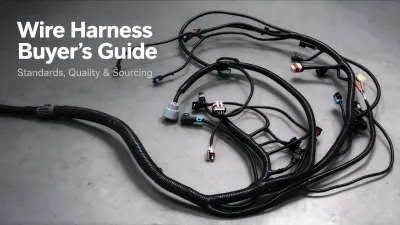
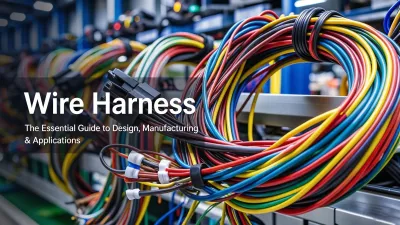
An electrical wiring harness, commonly called a wire harness, is an organized assembly of wires or cables, terminals, connectors, and protective components designed to connect electrical components within a system. The conductors are arranged, routed, and secured according to defined electrical and mechanical requirements so the assembly can be installed as a unit. Depending on the application, a harness may also include identification labels, splices, shielding, and additional protective materials. This guide gives the complete definition: what a harness is, what it contains, how it works, what types exist, where it is used, and how it differs from related concepts.
What Is an Electrical Wiring Harness?
A harness is more than a group of wires tied together. As an engineered part, it is defined by several characteristics:
- Defined electrical connection relationships, conductor lengths, branches, and interface positions.
- Designed against the target machine's installation environment and electrical requirements.
- Drawing, wiring table, and inspection requirements that ensure consistent quality across production.
Bundling many circuits into one harness keeps a complex system installable and serviceable, protects conductors against mechanical and environmental damage, and standardizes how the product is built on a production line. For a definition-focused overview of structure, types, and applications, see our What Is a Wire Harness? article.

Main Components of an Electrical Wiring Harness
Depending on the design, a harness draws on several groups of components. Not every harness includes connectors, shielding, or seals — these are present only where the application requires them:
|
Component
|
Function
|
Examples
|
|---|---|---|
|
Conductors
|
Transmit current or signals; sized by gauge and insulation class for the load and environment
|
Wires and cables in specified AWG sizes and insulation types
|
|
Terminals and splices
|
Form wire terminations or wire-to-wire connections, processed with calibrated tooling
|
Crimped terminals, contacts, butt splices
|
|
Connectors
|
Provide the interface to other components, detachable where required
|
Housings, receptacles, plugs, headers
|
|
Protective materials
|
Provide insulation, abrasion, heat, sealing, or EMI functions depending on the design
|
Conduit, tubing, braid, sleeving, heat-shrink
|
|
Routing and bundling hardware
|
Fix the harness path, branch positions, and installation
|
Ties, tapes, clamps, bindings
|
How an Electrical Wiring Harness Works
Conductors carry power or signals between designated connection points. Insulation separates electrical circuits, while terminals and connectors establish the required electrical connections. Depending on the application, shielding may be used to manage electromagnetic interference, and protective materials may help resist abrasion, heat, moisture, or chemical exposure. Routing and bundling features keep the harness positioned for installation and operation.
Common Types and Configurations of Electrical Wiring Harnesses
Harnesses are often described by application or by design requirements, and the two dimensions are not mutually exclusive — a robotic harness, for example, can also be industrial, high-flex, and sealed.
By Application
Automotive and vehicle, industrial and automation, medical devices, aerospace and defense, energy and solar, and telecommunications harnesses each set different materials, protection, and testing. See our industrial wiring harness article for more detail.
By Design Requirements
- Sealed and waterproof harnesses — for moisture and dust protection in outdoor, marine, or harsh environments. See our waterproof cable assemblies guide.
- High-flex and robotic harnesses — designed for repeated motion and bending. See our bending-resistant robot wiring harness article.
- Shielded harnesses — manage electromagnetic interference for sensitive signals.
- High-voltage and high-current harnesses — with insulation and protection sized for the voltage rating and current-carrying capacity.
Where Electrical Wiring Harnesses Are Used
Wire harnesses are used across many industries, each with different standards and duty profiles. The standards below are examples, not universal requirements — applicability depends on the product, installation, target market, customer specifications, and regulatory requirements.
|
Application Class
|
What It Demands
|
Examples of Applicable Standards and Specifications
|
|---|---|---|
|
Automotive & Vehicles
|
High volume, vibration, temperature extremes, sealed connectors
|
SAE/USCAR-21 (cable-to-terminal crimps), IPC/WHMA-A-620 (workmanship)
|
|
Industrial & Automation
|
Flex life, oil and coolant exposure, harsh floor environments
|
NFPA 79, IEC 60204-1 (machine electrical systems)
|
|
Medical Devices
|
Tight tolerances, cleanliness, and full traceability; material requirements depend on device use, material contact, and applicable regulations
|
IEC 60601-1 (applicability depends on device type)
|
|
Energy & Solar
|
Outdoor UV and weathering, high-current DC
|
UL 4703 (photovoltaic wire), UL 6703 (photovoltaic connectors)
|
|
Aerospace & Defense
|
Precision, low weight, extreme reliability, deep documentation
|
AS50881 (wiring design and installation practice), IPC/WHMA-A-620
|
|
Telecom & Computing
|
Signal integrity, high density, controlled impedance
|
Applicable TIA standards, IPC/WHMA-A-620
|
Electrical Wiring Harness vs. Cable Assembly
The terms are often used interchangeably, and many suppliers treat them as synonyms. When a distinction is drawn, a cable assembly typically consists of one or more cables fitted with connectors or other terminations, often with an outer protective jacket or additional shielding. A wiring harness commonly contains multiple individual wires or cable branches arranged to connect different points within a system. Usage varies by industry and manufacturer. For a full comparison, see our Wire Harness vs Cable Assembly article.
How Electrical Wiring Harnesses Are Designed and Manufactured
Design starts from three inputs: the electrical schematic (circuits and loads), the mechanical environment (routing space, temperature, vibration, exposure), and the interface definitions (connectors at every entry and exit point). These inputs drive the choice of wire, terminals, connectors, and protection. For deeper guidance, see our wire gauge selection, material selection, and connector selection articles.
Manufacturing turns the drawing into product through a controlled sequence. The exact order can vary with the connector design, the harness branches, and the tooling used, but a representative flow is:
- Cut and strip wires to length, with stripping quality set by the drawing.
- Crimp terminals onto wire ends using compatible tooling and validated process settings.
- Insert terminals into connector housings and sub-assemble.
- Lay the bundle out on a full-size form board that mirrors the drawing, fixing routing and branch positions.
- Apply bundling and protection: ties, tape, sleeving, conduit, and heat-shrink per specification.
- Electrically test the finished harness per the product specification.
For design-for-manufacturability guidance, see our Wire Harness DFM article.
Quality, Testing, and Reliability
Wire harness reliability depends on appropriate design, component selection, manufacturing controls, and verification under the intended operating conditions. Crimp inspection and electrical testing are important parts of this process, with specific requirements defined by the product specification and control plan. Tests may include continuity, open- and short-circuit detection, and pin-to-pin verification, with insulation resistance or dielectric withstand testing performed when required by the design, customer specification, or applicable standard. For a deeper treatment of crimp verification, testing, and traceability, see our Wire Harness Testing article.
What Defines a Complete Wiring Harness Specification?
A harness is fully defined when its technical characteristics are established:
- Electrical schematic or harness drawing
- Wire gauge, material, and insulation requirements
- Connector part numbers and pin definitions
- Lengths, branches, and routing paths
- Installation environment and working conditions
- Test and acceptance requirements
For quotation and production planning, the following also matter:
- Order quantity and expected production batches
- Drawing version and revision status
- Required dimensions, tolerances, and acceptance standards
- Documentation delivery requirements
For cost drivers and the buying process, see our Wire Harness Cost Factors article.
FAQ
How does a wiring harness differ from a cable assembly?
The distinction depends on the product and industry. A wiring harness often organizes multiple wires and branches, while a cable assembly commonly uses one or more finished cables with terminations. See our Wire Harness vs Cable Assembly guide for a detailed comparison.
What information is needed to get a wire harness quote?
Start with any available drawing or wiring diagram and known specifications — wire gauge and material, connector types, operating environment, and required tests. Where items are not yet defined, they can be confirmed during a technical review with the manufacturer.
Does every wire harness require hipot testing?
No. Whether dielectric withstand (hipot) testing applies depends on the design, customer specification, applicable standard, and risk class. Test requirements are defined per project rather than applied uniformly to every harness.
How is wire harness quality verified?
The verification combination — crimp inspection, electrical testing, environmental validation, and traceability — is defined by the product specification and control plan. It is not a fixed set of tests applied to every product.
Getting Started With Your Wiring Harness
To evaluate a custom wiring harness, share your drawing or wiring diagram, estimated quantity, operating environment, connector requirements, and applicable testing specifications. These details help establish material requirements, manufacturing processes, and a suitable quotation scope. Contact us with your drawings and the engineering team will respond with the practical route to a reliable, buildable harness.