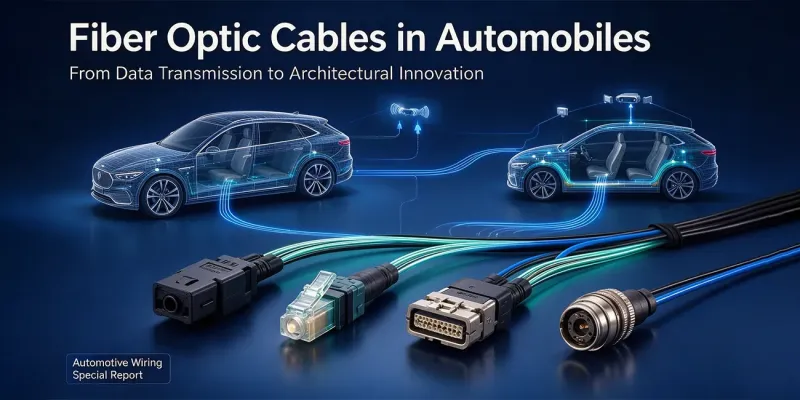
1. Why Fiber Optic Cables Are Replacing Traditional Copper Cables in Modern Automobiles
The rapid iteration of autonomous driving technology, intelligent cockpit systems, and new energy vehicles has profoundly reshaped the in-vehicle data transmission architecture and electrical distribution logic. Modern smart vehicles integrate a large number of intelligent sensing and interactive devices, including LiDAR units, 4K/8K high-definition cameras, millimeter-wave radars, multi-screen interactive cockpits, in-vehicle infotainment systems, and precision battery management modules. These devices generate continuous, high-density real-time data streams during vehicle operation, placing higher requirements on the transmission rate, operational stability, spatial layout efficiency, and lightweight performance of
automotive wiring harnesses and communication systems.
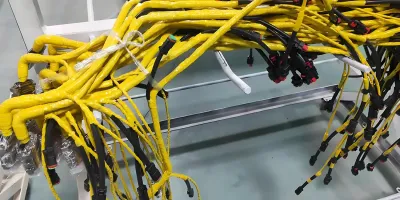
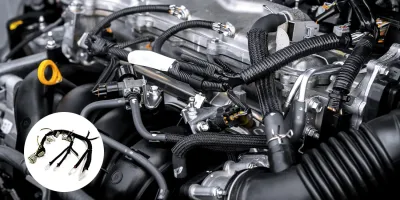
Copper wiring harnesses have been widely adopted in traditional automotive electrical systems for decades, thanks to their low material cost, mature crimping process, and convenient after-sales maintenance. Nevertheless, copper harnesses have inherent technical limitations in intelligent vehicle scenarios: limited transmission bandwidth, weak electromagnetic interference resistance, heavy overall weight, and large installation space occupation. In high-voltage working environments of new energy vehicles and complex electromagnetic coupling scenarios of intelligent driving, copper wiring is prone to signal crosstalk, transmission delay, and intermittent data loss, which has gradually become a key constraint restricting the upgrading of vehicle intelligent electrical architectures.
In comparison, automotive fiber optic cables transmit signals via optical signals instead of electrical conduction, effectively avoiding most electromagnetic interference problems that plague copper wiring solutions. With continuous optimization of optical fiber processing technology, supporting connector matching, and overall project cost control in automotive wiring engineering, in-vehicle fiber optic wiring has achieved large-scale loading on most mid-to-high-end smart vehicles. It is expected to gradually replace copper harnesses in high-speed data transmission scenarios over the next decade, serving as an important carrier for the iterative upgrading of automotive optical network architectures.
2. Core Advantages of Fiber Optic Cables for Automotive Applications
The increasing engineering penetration of automotive fiber optic cables in the automotive industry stems from their comprehensive performance advantages in actual vehicle loading scenarios compared with traditional copper harnesses. From the perspective of automotive wiring design, platform modular development, and mass production engineering, the technical characteristics of fiber optics for smart vehicles can well match the lightweight, high-speed, and high-reliability development trends of intelligent and new energy vehicles, making it a valuable technical upgrade direction for modern automotive wiring systems.
2.1 Ultra-high Bandwidth and Low Latency, Supporting Massive Data Transmission
Automotive fiber optic cables support single-channel transmission rates exceeding 10Gbps, far exceeding the bandwidth ceiling of conventional copper automotive harnesses. In practical vehicle engineering applications, this performance can fully meet the stable real-time transmission demands of 4K/8K ultra-high-definition video, LiDAR point cloud data, and multi-sensor fusion data required for L3-L4 conditional autonomous driving. Meanwhile,
in-vehicle optical communication delivers low transmission latency, which helps improve the response efficiency of vehicle dynamic control, active safety intervention, and intelligent decision-making systems, and further enhances the overall reliability of
vehicle electrical and electronic architectures.
2.2 Complete Electromagnetic Interference Immunity, Stable Signal Transmission
New energy vehicles are equipped with high-voltage battery packs, drive motors, and multi-module electronic control units, which generate complex electromagnetic radiation and coupling interference during long-term operation. Traditional copper harnesses rely on electrical signal transmission and are susceptible to line crosstalk, signal fluctuation, and transmission delay in complex EMI environments, which may interfere with the normal operation of precision on-board electrical equipment. In actual wiring engineering, automotive fiber optic cables feature non-conductive transmission characteristics, providing excellent immunity to external electromagnetic interference. They can adapt to harsh under-hood and in-cabin electromagnetic working conditions, effectively improving the long-term operational stability of core electronic systems and the reliability of in-vehicle high-speed data transmission.
2.3 Lightweight and Space-saving, Optimizing Vehicle Energy Efficiency
From the perspective of vehicle lightweight design and harness layout optimization, automotive fiber optic cables present significant practical advantages. Under the same specification and shielding level, optical fiber cables are 5-6 times lighter and smaller in outer diameter than shielded copper cables, capable of reducing the overall weight of vehicle wiring harnesses by approximately 60%-70%. Rational application of optical fiber harnesses effectively reduces vehicle idle load and fuel consumption for traditional vehicles, while optimizing the comprehensive cruising range of new energy electric vehicles. In addition, the compact structural size of in-vehicle fiber optic harnesses saves valuable layout space in the cockpit, engine compartment and chassis area, providing greater margin for vehicle body integration and electrical architecture modular design in mass production projects.
2.4 Long Transmission Distance and Strong Scalability
Mainstream automotive multi-gigabit optical fiber Ethernet supports a maximum transmission distance of 40 meters, covering most short-distance and medium-long-distance wiring scenarios in conventional passenger vehicles. Different from traditional copper cable networks with fixed functional boundaries and poor expandability, automotive optical network systems feature excellent scalability. In vehicle platform development, reserving standardized optical fiber interfaces and reasonable harness layout space can adapt to subsequent functional iterations of autonomous driving sensors and intelligent cockpit equipment, effectively reducing the renovation and upgrading cost of future automotive wiring systems during vehicle lifecycle iteration.
3. Practical Application Scenarios of Fiber Optic Cables in Automobiles
After years of vehicle road test verification, process iteration and market promotion, automotive fiber optic cables have achieved stable large-scale commercial loading in multiple core vehicle scenarios. At present, a relatively complete engineering application system has been formed, covering intelligent cockpit multimedia interaction, autonomous driving sensor data fusion, new energy vehicle electronic control signal transmission, and vehicle active safety monitoring. Optical fiber wiring has gradually become a standard matching part of the intelligent electrical architecture for mid-to-high-end smart vehicles.
3.1 Intelligent Cockpit Multimedia System
The intelligent cockpit is one of the earliest and most technically mature application scenarios of in-vehicle optical communication technology. Traditional copper-based cockpit audio and video wiring is prone to external interference during vehicle vibration and high-temperature operation, resulting in audio noise and screen stuttering that degrade user interactive experience. Currently, most mid-to-high-end smart vehicles adopt MOST bus optical fiber architecture and 1000BASE-RHC optical fiber Ethernet solutions. In actual harness matching and vehicle assembly engineering, these schemes realize synchronous, low-loss transmission of multi-screen display signals, high-fidelity audio streams and human-computer interaction data. The stable transmission performance of automotive fiber optic cables ensures synchronous linkage of multi-device cockpit systems and significantly improves overall vehicle interactive experience.
3.2 Autonomous Driving Sensor Fusion System
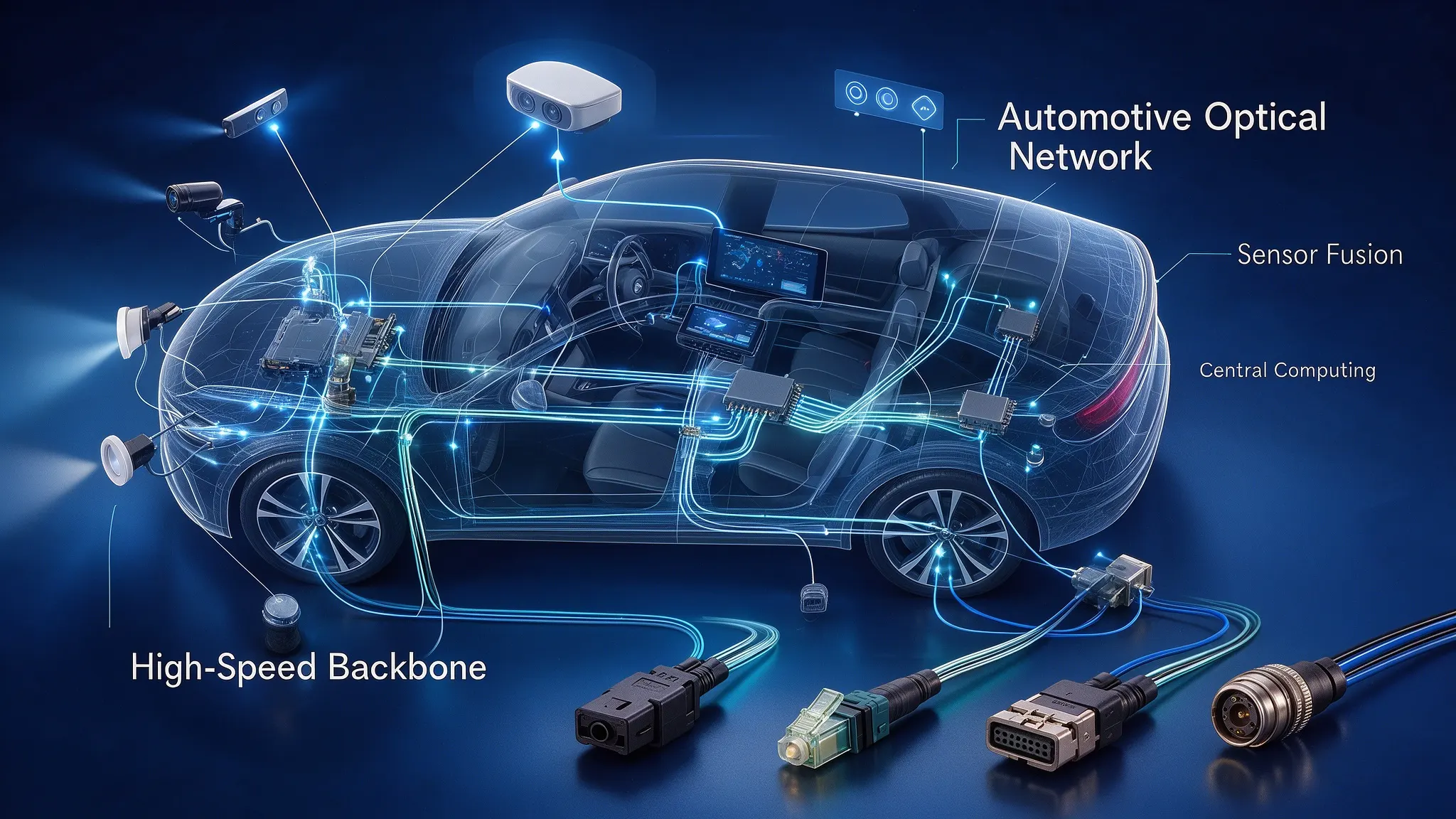
High-level autonomous driving functions rely on collaborative fusion perception of LiDAR, high-definition cameras, millimeter-wave radars and other multi-type sensors, which generate continuous massive data streams during vehicle driving. In the overall design of autonomous driving electrical architecture, automotive fiber optic cables undertake the core task of low-latency, high-reliability data interaction between front-end sensors and vehicle-mounted central computing units. Compared with copper harnesses that are prone to signal attenuation and interference under long-term vibration and high-temperature working conditions, fiber optics for smart vehicles maintain stable signal output, providing reliable data support for vehicle environment perception, logical decision-making and dynamic vehicle control.
3.3 New Energy Vehicle Electronic Control System
For new energy electric and hybrid vehicles, automotive fiber optic cables are widely applied in core electronic control links including battery management systems (BMS), motor control systems and vehicle control units (VCU) in mass production engineering. The integrated optical fiber communication and sensing technology supports real-time collection of battery temperature, voltage and operating state data, assisting manufacturers in realizing battery thermal runaway early warning and improving the overall safety margin of power battery systems. More importantly, in-vehicle optical communication physically isolates electromagnetic interference between high-voltage power systems and low-voltage precise control systems, ensuring the stable operation of vehicle core electronic control systems under full working conditions.
3.4 Vehicle Safety and Body Network System
The
automotive optical network built by
fiber optic cables can serve as the high-speed backbone of vehicle electrical systems, covering multiple functional modules such as intelligent body control, active safety protection, and intelligent lighting systems. From the perspective of harness system engineering, optical fiber networks feature higher transmission efficiency and stronger anti-interference capability than traditional CAN bus copper cable networks. They can quickly and accurately transmit safety early warning signals and body control instructions, effectively improving the overall driving safety and intelligent level of smart vehicles.
4. Mainstream Types of Automotive Fiber Optic Cables: POF vs Glass Fiber
In current
automotive wiring engineering and vehicle matching projects, mainstream
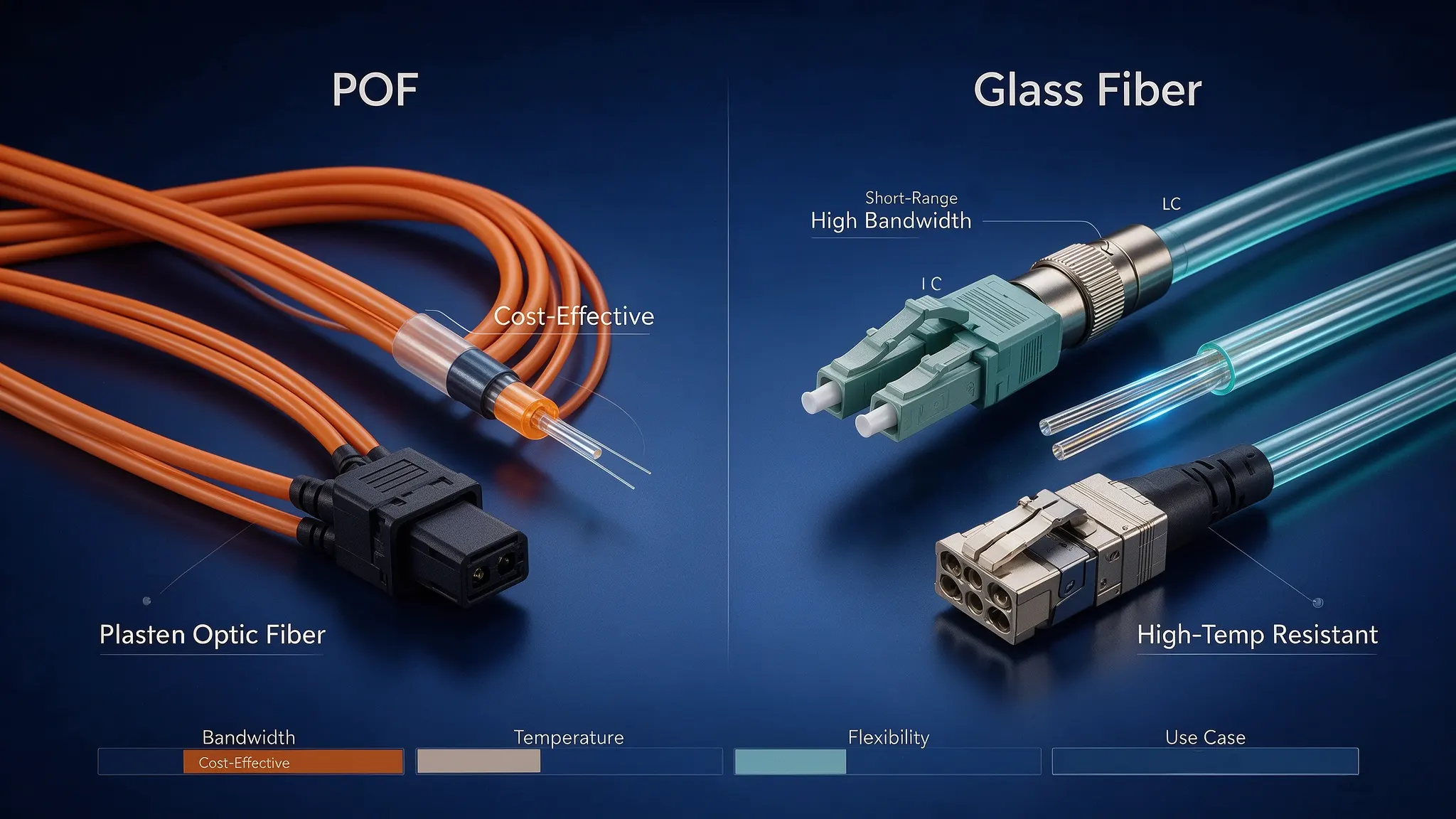
automotive fiber optic cables are mainly divided into two categories: Plastic Optical Fiber (POF) and Glass Optical Fiber. The two types of optical fibers have differentiated performance parameters, environmental adaptability and applicable working conditions, forming a complementary matching relationship in
fiber optics for smart vehicles engineering applications. Host manufacturers will select appropriate optical fiber solutions according to vehicle market positioning, functional configuration and mass production cost budgets.
Plastic Optical Fiber (POF) features low manufacturing cost, excellent flexibility, outstanding bending resistance and simple processing and wiring procedures, which is conducive to automated mass production assembly and daily after-sales maintenance. It is mainly used for short-distance, medium and low-speed in-vehicle high-speed data transmission scenarios such as cockpit multimedia systems and conventional body control modules, remaining the most cost-effective automotive fiber optic cable solution for mid-range civilian vehicles at this stage.
Glass Optical Fiber delivers higher transmission bandwidth, superior high-temperature resistance and structural stability, as well as longer service life, supporting multi-gigabit high-speed data transmission. It is mostly matched with high-end smart vehicles and L3+ high-level autonomous driving systems to meet the high-capacity data transmission demands of LiDAR and high-definition sensor arrays. Based on industry engineering verification and market forecast data, glass fiber is expected to account for 54.0% of the global automotive fiber optic cable market demand in 2026, gradually becoming the mainstream choice for high-end automotive optical network architecture construction.
5. Current Industry Challenges Restricting Large-scale Popularization
While fiber optics for smart vehicles possess prominent performance advantages and have achieved preliminary market promotion, the full-vehicle large-scale popularization ofautomotive fiber optic cables is still constrained by practical engineering problems such as cost control bottlenecks, process matching thresholds and incomplete industry standards in actual mass production scenarios.
5.1 Higher Comprehensive Cost Than Copper Cables
From the perspective of vehicle mass production cost control, automotive fiber optic cables and their supporting accessories including optical transceivers, precision connectors and optical module components have higher comprehensive system costs than traditional copper wiring solutions. In addition, the cutting, wiring, crimping and testing processes of in-vehicle optical communication systems require professional production equipment and skilled technical personnel, raising the overall manufacturing and after-sales maintenance costs. Such cost constraints limit the large-scale application of full optical fiber wiring in entry-level economical vehicles.
5.2 Strict Environmental Adaptability Requirements
Vehicles operate in highly complex and variable working environments, with extreme temperature cycling, long-term vibration, humidity erosion and dust accumulation, putting forward strict environmental adaptability requirements for on-board wiring harnesses. Ordinary optical fiber products are prone to transmission performance attenuation after repeated bending and extreme temperature impact. In automotive engineering design, automotive fiber optic cables require customized bending-resistant, vibration-resistant and high-low temperature resistant reinforced structures, such as automotive-grade OM3 optical fibers, which increases the difficulty of product development and process optimization for supporting manufacturers.
5.3 Unfinished Unified Industry Standards
The automotive fiber optic cable industry is in a rapid iterative development stage, and a unified global engineering standard system has not yet been fully established. Different manufacturers have inconsistent specifications in product dimensional tolerance, optical interface protocols, wiring process standards and offline testing verification criteria. The lack of unified industry specifications hinders the modular design, standardized assembly and batch production of in-vehicle optical communication systems, restricting the further large-scale popularization of automotive optical network technology.
6. Future Development Prospects of Automotive Fiber Optic Cables
Driven by the global automotive intelligent transformation trend and continuous engineering upgrading of autonomous driving technology, the automotive fiber optic cable industry is expected to maintain steady growth in the next decade. With continuous optimization of cost and process, optical fiber wiring will have broader vehicle application space, becoming an important upgrade direction for future automotive wiring system iteration.
6.1 Continuous Industry Market Growth
Authoritative market research data indicates that the global automotive fiber optic cable and optical data cable system market will maintain a compound annual growth rate (CAGR) of 13.4% from 2026 to 2036. With the gradual penetration of L3 and above conditional autonomous driving vehicles and the widespread popularization of full-scene intelligent cockpits, market demand for high-speed in-vehicle optical communication solutions will continue to rise. Benefiting from the vigorous development of the new energy vehicle industry, the Asia-Pacific region is expected to evolve into one of the core consumer markets for fiber optics for smart vehicles.
6.2 Technical Iteration: High-speed Glass Fiber Replaces Traditional POF
The automotive optical communication industry is undergoing critical engineering technical iteration: traditional 1Gbps low-speed Plastic Optical Fiber (POF) is gradually replaced by multi-gigabit high-speed glass optical fiber in high-end vehicle models. In the future, mainstream automotive fiber optic cables are expected to support 25Gbps and higher ultra-high-speed transmission rates, which can better adapt to the high-capacity data transmission demands of full-scene autonomous driving, vehicle-cloud interconnection and intelligent vehicle networking scenarios. Meanwhile, customized lightweight, high-temperature and vibration-resistant in-vehicle fiber optic products will gradually become the mainstream matching scheme for new vehicle platforms.
6.3 Full-vehicle Optical Network Becomes the Mainstream Architecture
Full-vehicle optical network is expected to become the mainstream wiring architecture for next-generation smart vehicles. Future vehicle electrical architectures will build unified high-speed automotive optical network backbones to realize integrated interconnection of intelligent driving systems, intelligent cockpit systems, active safety systems and new energy electronic control systems. This architecture can effectively alleviate the data transmission bottleneck of traditional distributed copper cable networks, realize efficient high-speed interconnection of all on-board intelligent equipment, and provide solid technical support for the engineering implementation of high-level autonomous driving and software-defined vehicles.
6.4 Deep Integration of Optical Fiber Sensing and Communication
Future automotive fiber optic cables will break through the single data transmission function and realize integrated engineering application of optical fiber communication and optical fiber sensing. In-vehicle optical communication sensing technology can be applied to vehicle body structural health monitoring, power battery safety early warning, real-time tire pressure monitoring and road condition intelligent perception, realizing comprehensive real-time sensing of vehicle operating status and further improving the overall safety and intelligent level of smart vehicles.
7. Conclusion
Automotive fiber optic cables have become a valuable upgraded wiring solution for modern intelligent and new energy vehicles by virtue of ultra-high bandwidth, excellent anti-interference performance, lightweight characteristics and reliable operational stability, effectively compensating for the performance shortcomings of traditional copper automotive harnesses. At present, fiber optics for smart vehicles have obtained sufficient engineering verification and large-scale application in intelligent cockpits, autonomous driving sensor fusion and new energy vehicle electronic control systems, with continuously expanding industrial scale and increasingly mature supporting processes and technologies.
Restricted by system cost barriers and incomplete unified global industry standards, the comprehensive popularization of full-vehicle automotive optical network technology still requires a certain development cycle. However, with the continuous progress of optical fiber manufacturing technology, gradual optimization of comprehensive application costs and continuous improvement of industry engineering specifications, full-vehicle optical fiber networking is expected to become the mainstream configuration of mid-to-high-end smart vehicles in the future. Automotive fiber optic cables will continue to empower the technical iteration and industrial upgrading of intelligent driving and vehicle networking, serving as a key core infrastructure for intelligent transportation and smart mobile travel.
FAQ
Q1: What are the main benefits of fiber optic cables in automobiles?
Automotive fiber optic cables possess core application advantages including ultra-high transmission bandwidth, complete electromagnetic interference immunity, 60%-70% lower harness weight than traditional copper cables and low transmission latency. In actual vehicle wiring engineering, these strengths effectively improve the operational efficiency and stability of in-vehicle high-speed data transmission, reduce comprehensive vehicle energy consumption, and provide reliable technical guarantee for the stable operation of high-level intelligent driving and cockpit interactive systems.
Q2: What is the difference between automotive POF and glass fiber?
Automotive POF (Plastic Optical Fiber) features low comprehensive cost and excellent flexibility, with low requirements for on-board wiring processes and after-sales maintenance, suitable for short-distance and medium-low speed in-vehicle optical communication scenarios represented by cockpit multimedia systems. Glass optical fiber has higher bandwidth capacity and better complex working condition adaptability, making it more suitable for high-speed data transmission of high-level autonomous driving sensors. It is expected to occupy a dominant market share in the high-end automotive fiber optic cable market in the future.
Q3: What is the future trend of automotive fiber optic technology?
From the perspective of automotive wiring engineering iteration, the core development trend of automotive fiber optic cable technology is the gradual replacement of low-speed POF products by multi-gigabit high-speed glass fiber. The industry will steadily promote the construction of full-vehicle automotive optical network, realize the integrated application of optical fiber communication and sensing functions, and accelerate large-scale market popularization through continuous cost reduction and standardized process optimization, guiding the upgrading direction of future automotive wiring systems.
Q4: What are the main challenges limiting the widespread use of automotive fiber optic cables?
The large-scale popularization ofautomotive fiber optic cables is mainly restricted by three practical engineering and market factors. First, the comprehensive matching cost of optical fiber harnesses, supporting connectors and functional modules is significantly higher than that of traditional copper wiring systems. Second, in-vehicle optical communication systems require professional wiring processes, assembly equipment and maintenance technologies, raising the technical threshold for vehicle manufacturing and after-sales service. Third, the lack of unified global interface and process specifications results in poor product compatibility between different suppliers, limiting the modular batch application offiber optics for smart vehicles in entry-level models.
Q5: How do automotive fiber optic cables improve autonomous driving safety?
Automotive fiber optic cables effectively improve the safety margin of autonomous driving in practical engineering applications. Different from copper cables that are susceptible to electromagnetic interference and signal distortion, optical signal transmission avoids data delay and error caused by complex EMI environments, ensuring accurate and real-time transmission of core sensing data from LiDAR, HD cameras and radars. Stable in-vehicle high-speed data transmission supports efficient multi-sensor data fusion and timely decision response of vehicle computing units. Meanwhile, the high structural stability of automotive optical network reduces harness failure risks under complex vehicle vibration and temperature cycling conditions, providing reliable data transmission support for L3-L5 autonomous driving commercial scenarios.
Q6: Are automotive fiber optic cables durable enough for long-term vehicle operation?
Modern automotive fiber optic cables are developed and verified based on strict automotive-grade reliability standards, with excellent environmental adaptability and long-term operational durability. Professional in-vehicle optical fibers adopt reinforced outer sheath and anti-bending structural design, capable of adapting to long-term vehicle vibration, extreme temperature fluctuation, humid environment and dusty working conditions. Unlike copper harnesses that are prone to oxidation, aging and signal attenuation after long-term service, qualified in-vehicle optical communication cables maintain stable transmission performance throughout the vehicle service lifecycle. After strict automotive-grade environmental testing and reliability verification, fiber optics for smart vehicles can fully meet the long-term operation requirements of passenger cars and commercial vehicles.
Q7: Will automotive fiber optics completely replace copper wiring in future cars?
Automotive fiber optic cables will become the mainstream high-speed data transmission solution for future smart vehicles, but complete replacement of all copper wiring is unlikely in the short term from the perspective of vehicle wiring engineering and cost balance. Optical fiber is more suitable for high-bandwidth, low-latency core transmission scenarios such as autonomous driving perception and intelligent cockpit interaction, while copper cables retain obvious cost and process advantages in low-speed signal control and power supply wiring. In the future, most vehicle platforms will adopt a hybrid wiring architecture that combines automotive optical network and copper harnesses: optical fibers undertake core high-speed data transmission tasks, and copper wiring is reserved for low-speed control and power supply functions, achieving a reasonable balance between vehicle comprehensive performance and mass production cost.