When riders talk about a motorcycle's "wiring," they usually mean the electrical wiring harness that carries power and signals to every component, plus the mechanical control cables that physically pull the throttle, clutch, and brakes. These two families are built differently, fail differently, and are specified differently.
This guide focuses on the motorcycle wiring harness — how it is built, how its circuits are sized, and how to specify a replacement or custom harness correctly — while clarifying where mechanical control cables fit into the picture.
Mechanical Control Cables vs. Electrical Wiring
It helps to separate the two from the start. A Bowden-style control cable is a sliding inner wire inside a flexible outer casing that transfers a pulling force. An electrical wire is a stranded copper conductor with insulation that carries current and signals. They are different products and are not interchangeable.
|
Aspect
|
Mechanical control cable
|
Electrical wire
|
|---|---|---|
|
Job
|
Transfers a pulling force
|
Transfers current and signals
|
|
Core
|
Stranded steel wire rope
|
Stranded copper conductor
|
|
Construction
|
Inner wire, liner, casing, outer jacket
|
Conductor plus PVC / XLPE / silicone insulation
|
|
Failure mode
|
Fraying, kinking, binding, snapped wire
|
Short circuit, open circuit, corrosion, melted insulation
|
|
Specified by
|
Wire rope rating, casing bend radius, travel, end fittings
|
Gauge, voltage rating, current rating, temperature, environment
|
Throttle, Clutch, and Brake Cables
On mechanically operated motorcycles, the throttle grip moves the carburetor or throttle body through one or two cables, depending on the design. On throttle-by-wire motorcycles, a position sensor sends the rider's input to an electronic control unit, which operates the throttle actuator — so there is no conventional mechanical cable running from the grip to the throttle body.
A clutch cable must withstand the operating force required by the clutch mechanism. Its inner wire, outer casing, end fittings, and adjustment range must be compatible with the motorcycle's original design.
Some motorcycles use mechanical cables to actuate drum brakes, while many modern braking systems use hydraulic lines and calipers. The correct replacement depends on the original brake design. Never substitute a generic cable for a safety-critical brake cable without confirming its load capacity, end fittings, travel, and compatibility. Note that hydraulic brake lines are a separate product from electrical wiring and are outside the scope of a wiring harness.
Choke and Mechanical Speedometer Cables
A choke or enricher cable operates the enrichment valve on carbureted bikes, and a mechanical speedometer driven cable spins the needle from the front wheel. Both are mainly found on models that use the corresponding mechanical design; many modern motorcycles use electronic fuel injection, an electronic speedometer, or both, so these cables are not universal.
How a Motorcycle Wiring Harness Works
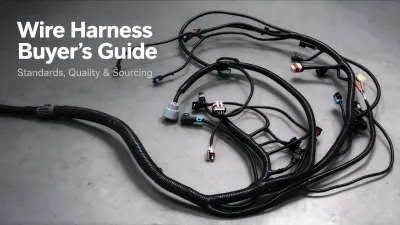
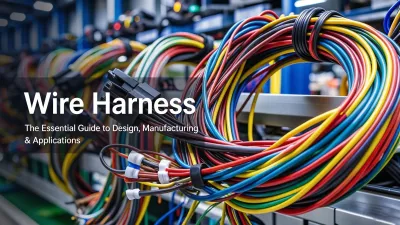
A motorcycle wiring harness bundles insulated copper wires from a central junction into branches that reach every electrical component. Each wire carries one circuit — power, ground, signal, or data — and the harness protects the circuits from vibration, chafing, and the environment.
|
System
|
What it carries
|
Design notes
|
|---|---|---|
|
Main harness and branch circuits
|
Switched and fused control circuits for accessories and electronics
|
High-current starting and charging paths usually run through separate larger-gauge cables rather than the general low-current circuits
|
|
Battery and starter cables
|
High-current cranking and charging circuits
|
Conductor sized for cranking current, cable length, voltage drop, and thermal conditions; no single universal gauge
|
|
Ignition, lighting, and sensor wiring
|
Ignition signals, lights, and sensor inputs
|
Ignition may use a separate high-voltage lead or coil-on-plug; lighting is medium-gauge; sensors are light-gauge, often shielded
|
Main Harness and Branch Circuits
The main harness is the backbone of the electrical system. Many harnesses use color-coded wires so a technician can trace a circuit, although the color scheme varies by manufacturer. Good design includes proper routing, strain relief, sealed connectors, and protection against vibration and chafing wherever the bundle touches the frame.
Battery and Starter Cables
Battery and starter cables carry the highest current on the bike. The conductor size must be selected for the expected cranking current, cable length, allowable voltage drop, and thermal conditions. Terminal design and connection resistance also affect starting performance, so there is no single gauge that applies to every motorcycle. A loose or corroded starter connection is a classic cause of "click but no crank."
Ignition, Lighting, and Sensor Wiring
Depending on the ignition design, a motorcycle may use a separate high-voltage ignition lead or an ignition coil mounted directly on the spark plug, known as coil-on-plug. The lead construction and insulation requirements must match the ignition system and its operating environment; conductor and suppression designs vary between systems. Lighting circuits carry medium loads, while sensor and instrument circuits use light-gauge, often shielded, wiring for clean signals.

Motorcycle Wire Gauge and Material Selection
Choose the right conductor and insulation for each circuit:
- Gauge — size the conductor for the actual current, the cable length, and the allowable voltage drop; undersized wire heats up and drops voltage.
- Insulation — use PVC or XLPE for general circuits, and silicone or EPDM where heat and oil are present.
- Connectors — match connector type and pin style to the component and the environment, and protect them from moisture.
- Routing and protection — use grommets, sleeving, and strain relief where wires pass through the frame or near moving and hot parts.

Common Wiring and Cable Failures
- Frayed or snapped inner wire — inspect the visible sections of a control cable, especially near the adjusters, and replace before failure.
- Stiff control cable — check the routing, adjustment, and condition. Lubricate only if permitted by the cable manufacturer's instructions and with a compatible lubricant; replace cables with frayed wires, damaged casings, corrosion, or persistent binding.
- Corroded or loose terminals — inspect the connection and repair or replace damaged ones. Severely corroded or loose terminals should be replaced rather than cleaned and reused. Use connector grease only as recommended by the manufacturer, typically to protect seals and exposed interfaces, not as a substitute for sound electrical contact.
- Melted or chafed insulation — secure the harness away from exhaust and frame edges, and use grommets and protective sleeving.
How to Specify a Custom Motorcycle Wiring Harness
When you order a custom harness, the manufacturer needs a clear specification:
- Circuit list — every circuit, its function, current, and ground path.
- Connectors — the connector type, pin style, and sealing requirement for each interface.
- Routing — the intended path through the frame and the physical constraints.
- Environment — temperature, moisture, fuel, and vibration the harness must survive.
- Reference — a drawing, sample, or target spec that defines the details.
Safety-related circuits, including braking and ignition, must be specified and validated against the motorcycle's original design. Provide load and travel data for control cables, and current and connector requirements for electrical circuits.
Frequently Asked Questions
Can I use a brake cable as a throttle cable?
No. Different control cables are designed for different loads, travel, end fittings, casing structure, and motorcycle compatibility. They are not interchangeable based on appearance or thickness alone.
Why does my speedometer stop working?
On a mechanical speedometer, the driven cable has likely snapped or the casing has kinked. On an electronic speedometer, check the wheel speed sensor and its wiring instead.
What gauge wire does a motorcycle use?
It depends on the circuit. Signal and instrument circuits use light-gauge wire, lighting uses medium gauge, and battery and starter circuits use conductors sized for the actual cranking current, cable length, and voltage drop.
Can a custom wiring harness be made for my bike?
Yes. A custom harness is built to your routing, connector, circuit, and environmental requirements, using the correct gauges and protection for the application.
Custom Motorcycle Wiring Harness Manufacturing
Motorcycle wiring harnesses must match the electrical requirements, connector interfaces, routing constraints, and operating environment of the application. We manufacture custom wire harnesses and cable assemblies based on customer drawings, samples, and technical specifications. Visit wireharnessassembly.com to discuss your motorcycle or powersports wiring project with our engineering team.