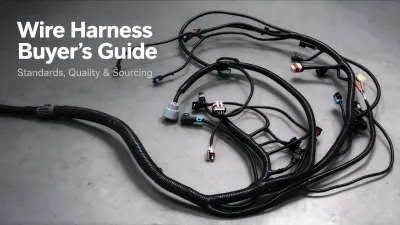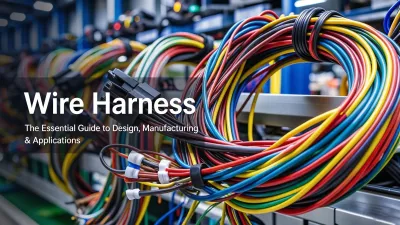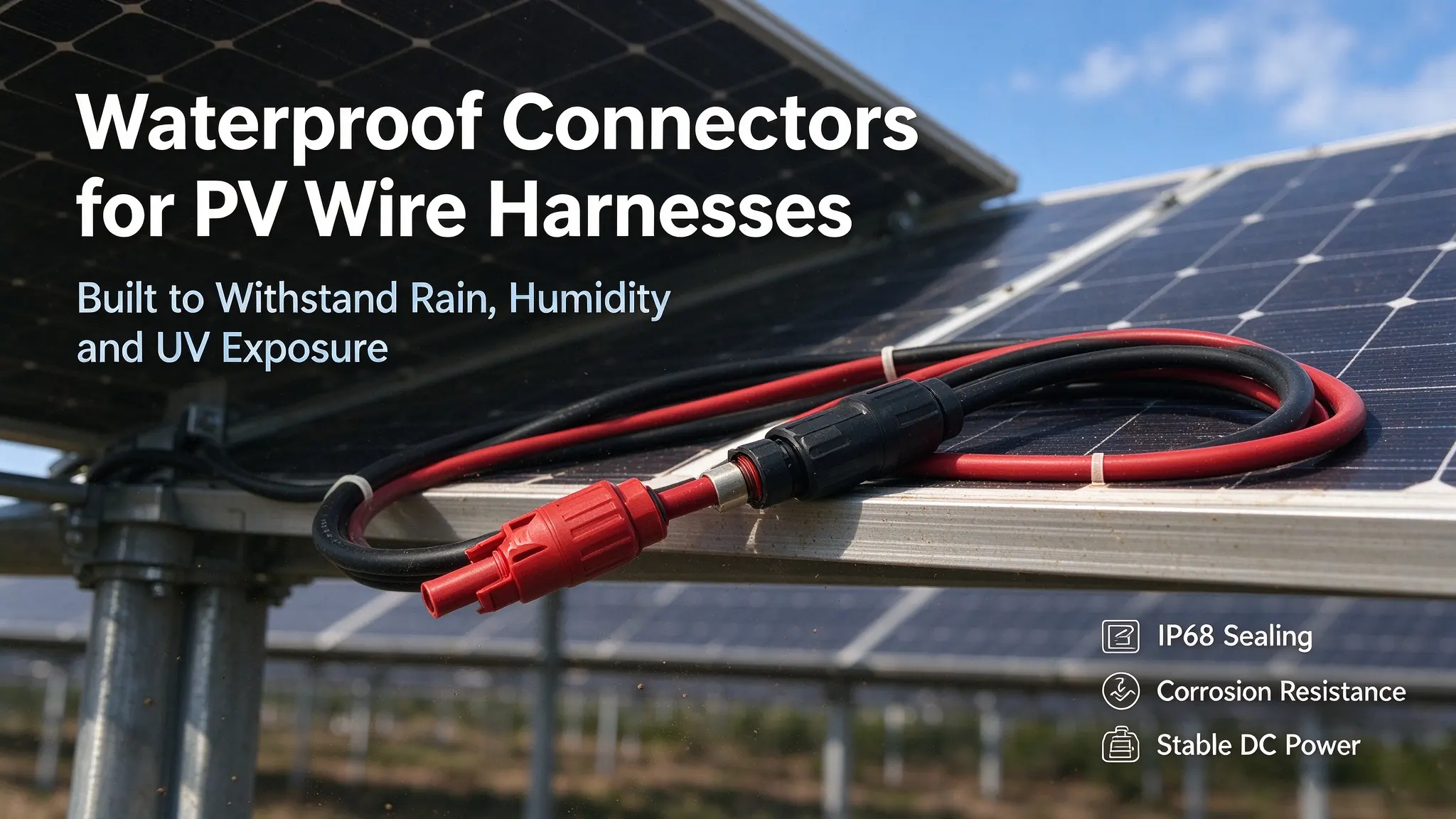
As the global photovoltaic (PV) industry continues to expand rapidly, solar power systems are widely deployed in diverse scenarios, including residential rooftops, commercial power stations, and large-scale ground photovoltaic plants. PV wire harnesses serve as the core transmission carrier of solar power systems, undertaking the crucial task of connecting solar panels, inverters, energy storage devices, and power grids. As a key component of PV wire harnesses, waterproof connectors directly determine the stability, safety, and service life of the entire power transmission system. In complex and harsh outdoor environments, waterproof PV connectors effectively avoid power transmission failures caused by moisture, dust, corrosion, and mechanical vibration, ensuring long-term reliable operation of solar power systems.
The Core Value of Waterproof Connectors for PV Wire Harnesses
Solar power systems operate outdoors all year round, facing extreme environmental tests such as rainwater immersion, high humidity, sand and dust erosion, high and low temperature alternation, and salt spray corrosion. Ordinary common connectors are prone to water ingress, oxidation of conductive contacts, short circuits, and poor contact in such environments, which will lead to power attenuation of PV systems, frequent system failures, and even safety accidents such as electric leakage and fire. Waterproof connectors tailored for PV wire harnesses solve these industry pain points fundamentally.
First of all, excellent waterproof and dustproof performance isolates external moisture and impurities from the internal conductive structure of the connector, maintaining stable electrical conductivity for a long time and reducing power transmission loss. Secondly, professional PV waterproof connectors have good environmental adaptability, resisting aging, ultraviolet radiation, and temperature impact, and can maintain stable structural and electrical performance in the temperature range of -40°C to 85°C, adapting to extreme weather changes in different regions. In addition, standardized locking and sealing structures effectively resist mechanical vibration and external pulling, avoiding loose connection of wire harnesses caused by wind blowing, shaking and artificial accidental touch, and ensuring continuous and stable power transmission of PV systems.
Key Performance Standards of PV Waterproof Connectors
To meet the stringent operating requirements of photovoltaic systems, waterproof connectors for PV wire harnesses need to comply with international industry standards and have multiple core performance indicators. In terms of protection grade, mainstream high-quality PV connectors reach IP67 or even IP68/IPX9K protection levels. IP67 grade realizes full dust prevention and short-term water immersion resistance, meeting the daily outdoor waterproof demand of most photovoltaic systems; while IP68/IPX9K high-grade protection supports long-term water immersion and high-temperature and high-pressure water flushing, which is suitable for humid coastal areas, rainy and foggy areas and other harsh working conditions.
In terms of electrical performance, formal PV waterproof connectors support DC high voltage of 1000V and 1500V, matching the high-power transmission demand of modern large-scale photovoltaic power stations, with a rated current covering 20A to 30A, which can adapt to different specifications of PV wire harnesses. The conductive parts adopt high-purity copper plating process, which has low contact resistance and high conductivity, effectively reducing power loss during long-distance transmission. At the same time, the connectors have excellent insulation performance, with high insulation resistance, which can effectively prevent electric leakage and ensure the safety of system operation and personnel.
In terms of structural and durable performance, PV waterproof connectors adopt elastic sealing ring waterproof structure and self-locking buckle design. The one-touch plug-in and locking structure enables fast and convenient on-site installation, while ensuring tight and firm docking. The shell is made of high-strength engineering plastic or all-plastic anti-corrosion material, which has excellent salt spray resistance, acid and alkali corrosion resistance, and anti-aging ability, with a service life of more than 25 years, consistent with the service life of photovoltaic power generation equipment, reducing the frequency of later maintenance and replacement.
Mainstream Types and Application Scenarios of PV Waterproof Connectors
At present, MC4 connectors are the most mainstream waterproof connectors for PV wire harnesses in the global photovoltaic market. With standardized size, stable performance and strong compatibility, MC4 connectors are suitable for most residential, commercial and ground photovoltaic systems. They are divided into male and female butt joint structures, with IP67 standard waterproof performance, simple installation and reliable locking, and can realize quick connection and disassembly of PV wire harnesses, which is convenient for equipment debugging and maintenance.
For special harsh environments such as high humidity, heavy rain and coastal salt spray areas, high-grade industrial waterproof connectors such as DH16 and DL28 series are widely used. These connectors adopt upgraded double insurance sealing structure, with IP68+IPX9K dual high protection level, full plastic anti-corrosion design, stronger resistance to severe corrosion and extreme weather, and are suitable for offshore photovoltaic, wet mountain photovoltaic and other special scenarios. In addition, multi-branch T-type waterproof connectors are applied in distributed photovoltaic systems, realizing one-to-multiple wire harness connection, simplifying the wiring structure of the system and improving the integration of photovoltaic equipment.
Selection and Installation Guidelines for PV Waterproof Connectors
The rational selection and standardized installation of waterproof connectors are the key to give full play to their reliable performance. In terms of model selection, it is necessary to match the voltage, current and wire diameter of the PV wire harness, and select connectors with corresponding protection levels according to the actual operating environment. For conventional outdoor photovoltaic systems, IP67-grade MC4 connectors can meet the demand; for extreme harsh environments, IP68 high-protection industrial-grade connectors are preferred. At the same time, priority should be given to products with TUV, CE and other international certifications to ensure compliance with industry safety standards.
In terms of installation and use, the construction personnel need to standardize the crimping operation of the connector and the wire harness to ensure tight crimping and no virtual connection, so as to avoid excessive contact resistance and heat generation. After docking, it is necessary to confirm that the self-locking buckle is completely locked and the sealing ring is tightly fitted, so as to prevent gaps from causing water and dust ingress. In the later operation and maintenance process, regular inspection of the connector sealing state, aging degree and connection firmness is required, and aging and damaged connectors should be replaced in time to maintain the long-term stable operation of the PV power transmission system.
Conclusion
Waterproof connectors are indispensable core components of PV wire harnesses, and their waterproof, anti-corrosion, stable and durable performance is the fundamental guarantee for reliable solar power transmission. With the continuous upgrading of photovoltaic industry technology and the continuous expansion of application scenarios, PV waterproof connectors are developing towards higher protection level, higher voltage and current resistance, stronger environmental adaptability and more convenient installation. High-quality standardized waterproof connectors can effectively reduce the failure rate and maintenance cost of photovoltaic systems, improve power transmission efficiency, and provide solid technical support for the safe, stable and long-term operation of global solar power generation systems.