As electric vehicles (EVs) adopt higher-voltage platforms and more complex distributed electrical architectures, wiring harness design and manufacturing have become core engineering disciplines that impact vehicle safety, reliability, and build quality. An EV wiring harness (new energy vehicle wiring harness) serves as the physical interconnection for power distribution and signal communication across batteries, motors, ECUs, and vehicle sensors.
Compared with traditional fuel vehicle wiring systems, EV harnesses face stricter constraints on insulation, high-voltage protection, electromagnetic compatibility, and environmental resistance. This guide provides practical, factory-backed engineering knowledge covering harness classification, design specifications, standardized manufacturing processes, quality testing, supplier evaluation, and field maintenance, tailored for automotive engineers, OEM procurement teams, and wiring harness manufacturers.
1. Definition & Core Functions of EV Wiring Harness
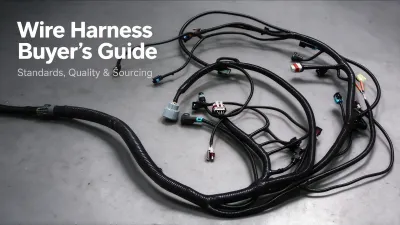
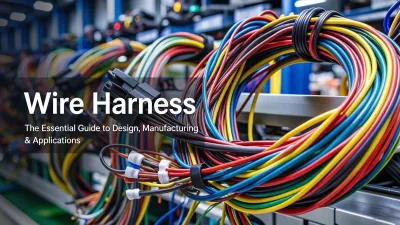
An EV wiring harness is a customized assembly of insulated cables, terminals, connectors, shielding components, and protective accessories. It interconnects all electrical subsystems within electric vehicles to support stable power distribution and real-time signal interaction.
EV wiring harnesses deliver two core functional roles across all electric vehicle platforms:
-
High-Voltage Power Distribution: Transmits electrical energy from traction batteries to powertrain and auxiliary high-voltage components, supporting vehicle propulsion, on-board charging, and thermal system operation.
-
Vehicle Signal & Data Communication: Transmits sensor feedback, control commands, and system status data between ECUs and peripheral devices to support vehicle control and intelligent driving functions.
It is critical to distinguish industry standard hierarchies for professional engineering compliance:ISO 6469 and GB/T 18384 define mandatory road vehicle electrical safety regulations for electric vehicles, while IPC/WHMA-A-620 is the global industrial specification for wire harness assembly manufacturing, workmanship, and visual acceptance criteria. IPC 620 governs production process quality rather than vehicle-level safety certification requirements.
2. Practical Classification of EV Wiring Harnesses (By Vehicle Application Scenario)
Basic high-voltage, low-voltage, and signal classification is widely used in introductory materials. For actual automotive R&D and manufacturing, harnesses are categorized by vehicle installation position and functional subsystem, which aligns with real OEM project workflows and engineering validation standards:
2.1 High-Voltage Battery Harness
Connects traction battery packs to power distribution units (PDUs) and inverters. It carries full-system high-voltage current and typically requires double-layer insulation, arc resistance, and dedicated HVIL protection structures.
2.2 EV Charging Harness
Covers both AC slow charging and DC fast charging interfaces. Designed to withstand instantaneous high current during fast charging, with enhanced waterproof performance and locking structure reliability.
2.3 Motor & Inverter Harness
Links inverters to drive motors. Subject to frequent current fluctuation and electromagnetic interference, requiring optimized shielding and vibration resistance design.
2.4 High-Voltage Auxiliary Harness
Supplies power to high-voltage auxiliary equipment including electric HVAC, PTC heaters, and air compressors, adapting to intermittent operating conditions.
2.5 Low-Voltage Body Harness
Covers vehicle body low-voltage systems such as interior lighting, door control units, and body control modules (BCM), focusing on flexible wiring and anti-interference performance.
2.6 ADAS & Data Signal Harness
Connects radars, cameras, and environment perception sensors. Requires precise shielding and stable transmission performance to reduce signal distortion under complex vehicle electromagnetic environments.
2.7 BMS Sensing Harness
Dedicated to battery management system data collection, including battery temperature and voltage sampling signals, with strict requirements for harness stability and anti-aging performance.

3. Key Engineering Design Requirements for EV Wiring Harnesses
EV harness design balances safety compliance, mechanical durability, environmental adaptability, and vehicle lightweighting. All design rules follow OEM engineering specifications and industry standard systems.
3.1 Regulatory & Process Compliance
Vehicle-level electrical safety follows ISO 6469 and GB/T 18384 standards. All assembly workmanship, crimping quality, and finished product appearance comply with IPC/WHMA-A-620 manufacturing and acceptance specifications to stabilize batch production quality.
3.2 High-Voltage Safety & Insulation Design
High-voltage harness insulation and outer sheath typically adopt flame-retardant, high-temperature resistant materials. HVIL (High Voltage Interlock Loop) circuits are configured on high-voltage connectors to help ensure system power-off protection when connectors are abnormally disconnected.
3.3 Lightweight & Layout Optimization
Engineers select thin-wall insulated cables and high-efficiency conductor materials depending on vehicle architecture. Optimized routing and modular integration help reduce overall vehicle weight and improve cruising efficiency.
3.4 Vibration & Environmental Durability
On-board harnesses are designed to withstand long-term vibration, high-low temperature cycles, humidity, and salt spray environments. Structural fixing and binding schemes are verified through vehicle road condition simulation tests.
3.5 Maintainable Modular Structure
Modular split design is commonly adopted for mainstream vehicle harnesses, facilitating on-site installation, later inspection, and component replacement while reducing after-sales maintenance costs.

4. Factory-Grade EV Harness Manufacturing Process & Core Technical Controls
The difference between qualified mass-produced harnesses and ordinary samples lies in standardized process control and full-item testing. The following is the complete industrial production flow and key technical control points implemented by professional EV harness manufacturers:
4.1 Standard Production Workflow
Engineering Drawing & BOM Confirmation → DFM Manufacturability Review → Automatic Cable Cutting & Stripping → Terminal Crimping → Shielding Layer Processing → Connector Assembly & Locking → Harness Binding & Protection → Full Electrical Testing → Visual Inspection & Dimension Verification → Packaging & Delivery
4.2 Core Manufacturing & Quality Control Items
-
Cable & Terminal Selection: Match wire gauge, insulation grade, and terminal models according to OEM current load and environmental requirements to avoid overheating and poor contact risks.
-
Crimping Process Control: Strictly control crimp height and crimp section flatness per IPC 620 standards. Regular crimp pull force testing is conducted to verify connection stability.
-
Shielding & Grounding Treatment: High-voltage and signal harnesses adopt standardized shielding termination and grounding procedures to suppress electromagnetic interference.
-
HVIL Circuit Configuration: High-voltage connectors support interlock signal detection, helping the vehicle system judge connection status and avoid live-line unplugging risks.
-
Full-Item Electrical Testing: 100% on-site testing including continuity verification, insulation resistance (IR) detection, and hipot high-voltage withstand testing to eliminate hidden circuit hazards.
-
Mechanical & Environmental Verification: Batch sampling for vibration resistance, salt spray, and temperature cycle tests to verify long-term service durability.
5. EV Wiring Harness Supplier Evaluation & Procurement Checklist
For OEMs and tier suppliers selecting customized EV wiring harness solutions, systematic supplier evaluation effectively reduces project risks and ensures batch consistency. The following practical evaluation checklist covers core procurement inspection dimensions:
|
Evaluation Item
|
Key Inspection Content
|
|---|---|
|
Engineering Capability
|
DFM review, drawing optimization, routing simulation, prototype design verification
|
|
Material Control
|
Qualified cable, terminal, and connector sourcing; material compliance with RoHS/REACH
|
|
Crimping Process
|
IPC 620 compliant crimp height, section quality, and pull force test records
|
|
Testing System
|
Continuity, hipot, insulation resistance, waterproof, and vibration test capabilities
|
|
Quality Traceability
|
Batch production records, inspection reports, and process file standardization
|
|
Production Capacity
|
Rapid prototyping support and stable mass production delivery capability
|
|
Certification Qualifications
|
IATF 16949, ISO 9001, and other automotive system certifications
|
|
Delivery Service
|
Flexible MOQ adaptation, stable lead time, and professional technical support
|
6. Field Maintenance Guidelines & Common Engineering Notes
Daily maintenance and fault handling of EV harnesses need to follow OEM repair specifications, avoiding arbitrary disassembly and replacement to prevent secondary failures.
6.1 Regular Inspection Items
Inspect harness sheath for aging, abrasion, and cracking; check connector terminals for looseness, oxidation, and water ingress. Timely maintain or replace defective parts to keep the electrical system stable.
6.2 Waterproof & Sealing Protection
High-voltage harness connectors rely on professional waterproof sealing structures. Keep the connection surface clean and dry during daily use and maintenance to prevent corrosion and short-circuit faults caused by moisture and dust accumulation.
6.3 Standard Wiring & Bending Control
Avoid excessive stretching, squeezing, and bending of harnesses. Follow vehicle-designated bending radius standards to prevent conductor fatigue and insulation damage after long-term operation.
6.4 Harness Reusability Engineering Rules
Harness reusability cannot be generalized. Low-voltage signal harnesses may be reused after professional insulation testing, continuity verification, and appearance inspection per OEM maintenance standards. For high-voltage power harnesses, comprehensive evaluation of insulation aging, terminal wear, and shielding layer status is required. In most vehicle maintenance scenarios, high-voltage harness replacement is recommended depending on service life and working conditions to mitigate safety risks.
7. Industry Development Trends of EV Wiring Harnesses
Driven by high-speed charging and intelligent vehicle iteration, EV harness manufacturing is evolving toward high-voltage platforms, intelligent monitoring, lightweight materials, and integrated modular design.
-
800V High-Voltage Platform Popularization: Increasing models adopt 800V high-voltage architectures, which can improve fast-charging efficiency and require upgraded insulation and pressure resistance for harnesses.
-
Embedded Intelligent Monitoring: New-generation harnesses are equipped with miniature sensing components to monitor real-time temperature, current, and voltage data, helping realize early fault warning and predictive maintenance.
-
Lightweight & Eco-Friendly Materials: High-performance lightweight conductors and recyclable insulating materials are gradually popularized, which can reduce vehicle weight and meet global environmental compliance requirements.
-
Highly Integrated Modular Harnesses: Integrated assembly replaces discrete wiring structures, simplifying vehicle assembly processes and adapting to iterative upgrades of intelligent electrical architectures.

8. FAQ for EV Wiring Harness Engineering & Procurement
Q1: Why are EV wiring harnesses more costly than traditional automotive harnesses?
A: EV high-voltage harnesses require specialized high-temperature resistant, flame-retardant, and anti-corrosion materials, plus dedicated shielding and HVIL protection structures. Meanwhile, production follows strict IPC/WHMA-A-620 process specifications and multi-round electrical and environmental testing, resulting in higher manufacturing costs than conventional low-voltage harnesses.
Q2: What are the risks of high-voltage harness short circuits?
A: High-voltage short circuits may generate high-temperature electric arcs, which can cause local wire ablation and system circuit failure. In severe cases, it may trigger vehicle safety hazards. Therefore, production, installation, and maintenance must follow standard specifications and be matched with complete vehicle protection mechanisms.
Q3: What core standards should compliant EV harness manufacturers follow?
A: Reliable manufacturers need to comply with vehicle safety regulations including ISO 6469 and GB/T 18384 for product safety design, and implement IPC/WHMA-A-620 specifications for all assembly processes. Meanwhile, they should hold IATF 16949 and ISO 9001 quality system certifications to ensure batch stability.
Q4: What capabilities should a qualified customized EV harness supplier have?
A: Professional suppliers need independent engineering DFM optimization capabilities, standardized IPC 620 production processes, complete in-house testing laboratories, rapid prototype verification services, and stable mass production delivery capabilities to meet OEM customized project requirements.
Conclusion
EV wiring harnesses are core structural components that determine the safety and operational reliability of electric vehicle electrical systems. Different from generalized industry introductions, professional harness manufacturing focuses on standardized process control, precise engineering parameter matching, and full-link quality testing. Adopting IPC/WHMA-A-620 compliant assembly processes and strictly following vehicle-level safety design specifications help automotive manufacturers obtain stable, high-reliability customized wiring harness solutions for mass production and project iteration.